One of the most common questions patients ask when diagnosed with peripheral neuropathy is: can this be reversed? The answer isn't simple: it depends on what's causing your neuropathy, how long you've had it, and how quickly treatment begins.
The good news is that many forms of peripheral neuropathy can be improved, stabilized, or even reversed when the underlying cause is identified and treated promptly. This guide covers which types of neuropathy respond to treatment and what you can do to give yourself the best chance of recovery.
Key Insight
Peripheral nerves have the ability to regenerate and heal, but this process is slow (about 1 inch per month) and works best when the underlying cause of damage is addressed early. The sooner you get an accurate diagnosis and begin treatment, the better your chances of improvement.
Is Nerve Damage Permanent? How Nerves Regrow
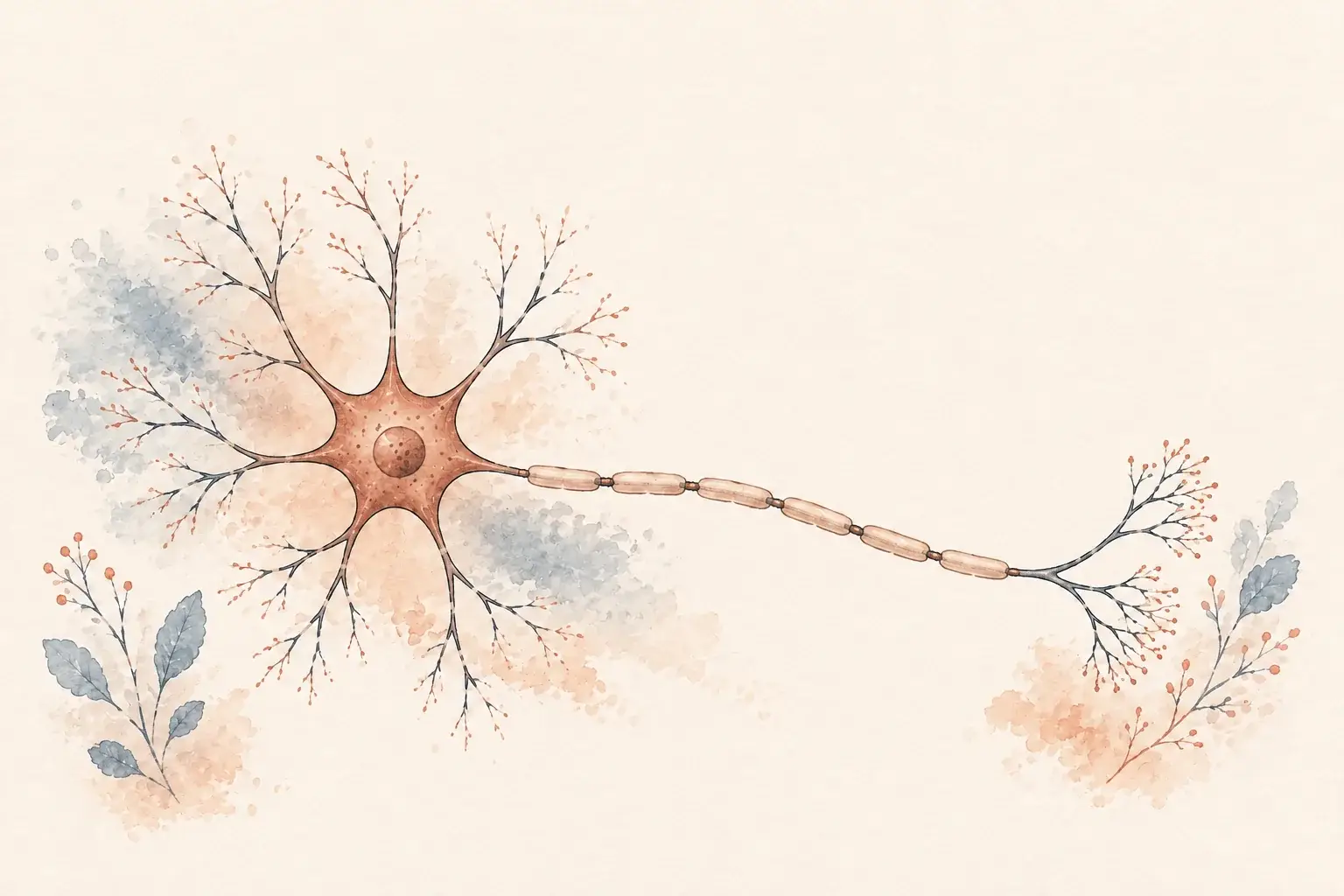
Unlike the central nervous system (brain and spinal cord), peripheral nerves have a remarkable capacity for regeneration. When nerve fibers are damaged, they can regrow and potentially restore function, if the conditions are right.
When the nerve cell and its sheath survive, the damaged fibers regrow about 1 mm a day, roughly an inch a month. The toes recover last, because their fibers are the longest in the body. A mild pressure or stretch injury often heals on its own, while damage from an ongoing cause does not heal until the cause stops.
Factors that support nerve recovery:
- Early identification and treatment of the underlying cause
- Removal of ongoing damage (stopping alcohol, controlling blood sugar, correcting deficiencies)
- Adequate nutrition to support nerve repair
- Time: regeneration is slow but possible
Factors that limit recovery:
- Long duration of nerve damage before treatment
- Severe or complete nerve destruction
- Ongoing exposure to the damaging agent
- Certain irreversible causes

What shapes nerve recovery
- Find the cause: Treatable causes include deficiencies, compression, and some medical conditions.
- Allow time: Peripheral nerve recovery is slow and varies from person to person.
- Set realistic goals: Improvement or stabilization can be meaningful even without full reversal.
Reversible vs. Irreversible Causes of Neuropathy
Not all neuropathies are created equal when it comes to reversibility. Here's a breakdown:
Potentially Reversible Causes
| Cause | Reversibility | Treatment Approach |
|---|---|---|
| Vitamin B12 deficiency | Often reversible if treated early; incomplete if long-standing | B12 supplementation (injections or high-dose oral) |
| Other vitamin deficiencies (B1, B6, E) | Usually reversible | Appropriate supplementation |
| Thyroid disorders | Often improves | Thyroid hormone management |
| Early diabetic neuropathy | Can stabilize or improve | Strict glucose control |
| Alcoholic neuropathy | May improve | Alcohol cessation + nutritional support |
| Autoimmune neuropathies (CIDP, GBS) | Often responds well | Immunotherapy (IVIG, plasma exchange; steroids for CIDP only) |
| Medication-induced | Often reversible | Stopping the offending medication |
| Compression neuropathies | Usually reversible | Decompression surgery, lifestyle changes |
| Toxin exposure | May improve | Removing toxin exposure |
Less Reversible Causes
| Cause | Outlook | Management Focus |
|---|---|---|
| Hereditary neuropathies (Charcot-Marie-Tooth) | Generally not reversible | Symptom management, physical therapy |
| Long-standing diabetic neuropathy | Stabilization is the goal | Prevent progression, manage symptoms |
| Severe chemotherapy-induced | Variable recovery | Often improves after chemo ends |
| Idiopathic (unknown cause) | Typically stable | Symptom management |
| Amyloid neuropathy | May stabilize with treatment | Disease-modifying therapies available |
Cases Where Neuropathy Often Improves
Vitamin Deficiency Neuropathy
Neuropathy caused by vitamin B12 deficiency is one of the most successfully treatable forms. When caught early, many patients experience significant or complete recovery with appropriate supplementation. However, if deficiency has been present for years with severe nerve damage, some symptoms may persist despite treatment.
What to expect: Improvement often begins within weeks to months of starting B12 therapy, though full recovery may take 6-12 months or longer.
Autoimmune and Inflammatory Neuropathies
Conditions like chronic inflammatory demyelinating polyneuropathy (CIDP) and Guillain-Barré syndrome, demyelinating neuropathies in which the immune system attacks the nerves' insulating coat, respond remarkably well to immunotherapy. Many patients achieve:
- Significant improvement in strength and sensation
- Stabilization of progressive symptoms
- Long-term remission with maintenance therapy
The key is early diagnosis and treatment. Autoimmune neurology evaluation can identify these treatable conditions.
Compression Neuropathies
Carpal tunnel syndrome and other compression neuropathies often improve dramatically with appropriate treatment:
- Mild cases: Splinting, activity modification, anti-inflammatory measures
- Moderate to severe: Surgical decompression often provides relief
Recovery depends on how long the nerve was compressed and how severely it was damaged.
Can Diabetic Neuropathy Be Reversed?
Diabetic neuropathy deserves special attention because it's the most common cause of peripheral neuropathy. While it's often described as "irreversible," the reality is more nuanced:
- Early diabetic neuropathy may stabilize, and its progression slow, with tight glucose control
- Prediabetes neuropathy can sometimes reverse with weight loss and glucose management
- Established diabetic neuropathy typically won't fully reverse, but progression can be halted
- Symptoms can often be well-controlled even when nerve damage persists
When diabetic neuropathy improves, it is usually the pain that eases with steady control, while numbness changes least. In a 2006 study of people with prediabetes and neuropathy, a diet and exercise program was followed by regrowth of small nerve fibers in the skin.
The most important factor is achieving and maintaining good blood sugar control as early as possible. One caution: a very fast drop in blood sugar can temporarily worsen nerve pain, an effect called treatment-induced neuropathy, so large changes to diabetes treatment are planned with your doctor.
The Role of Early Intervention
Time is critical in neuropathy treatment. Here's why early intervention matters:
When nerves are damaged but not destroyed:
- The supporting structure (nerve sheath) remains intact
- Nerve fibers can regenerate along this pathway
- Recovery is more likely and more complete
When nerve damage is long-standing:
- Supporting structures may break down
- Regeneration becomes more difficult
- Full recovery is less likely
This is why getting a comprehensive neurological evaluation at the first sign of symptoms is so important. Don't wait for symptoms to become severe before seeking help.
Treatment Approaches That Support Nerve Recovery
Addressing the Underlying Cause
This is the most important step. Treatment depends on the cause:
- Vitamin deficiencies: Supplementation
- Autoimmune conditions: Immunotherapy
- Diabetes: Glucose optimization
- Thyroid disorders: Hormone management
- Alcohol-related: Cessation and nutrition
- Medication-induced: Discontinuing the drug
- Compression: Decompression or surgery
Supporting Nerve Health
Beyond treating the underlying cause, several strategies may support nerve repair:
Nutritional support:
- Adequate B vitamins (especially B12, B1, B6)
Lifestyle factors:
- Regular exercise improves circulation and may support nerve health
- Smoking cessation (smoking impairs circulation to nerves)
- Limiting alcohol
- Maintaining healthy weight
Physical therapy:
- Helps maintain strength and function during recovery
- Balance training to prevent falls
- Strategies to protect numb areas from injury
Managing Symptoms
While waiting for nerve recovery, symptom management is important for quality of life:
- Neuropathic pain medications: Gabapentin, pregabalin, duloxetine
- Topical treatments: Lidocaine patches, capsaicin cream
- Physical therapy: Maintains function and prevents complications
- Assistive devices: As needed for balance or mobility
For the full picture of peripheral neuropathy treatment, including the medicines used for nerve pain, see our neuropathy guide.
Can Small Fiber Neuropathy Be Reversed?
Small fiber neuropathy deserves special mention. While it can cause significant symptoms (burning pain, tingling, autonomic dysfunction), small nerve fibers have greater regenerative capacity than large fibers.
When the underlying cause of small fiber neuropathy is identified and treated, many patients experience meaningful improvement. This is particularly true for:
- Small fiber neuropathy from autoimmune conditions
- Vitamin deficiency-related small fiber involvement
- Glucose intolerance-related small fiber damage
Getting an accurate diagnosis through small fiber skin biopsy is the first step toward identifying a treatable cause.
Realistic Expectations
It's important to have realistic expectations about neuropathy recovery:
Full reversal is possible for:
- Vitamin deficiency neuropathy caught early
- Some autoimmune neuropathies with treatment
- Compression neuropathies after decompression
Significant improvement is possible for:
- Many autoimmune neuropathies
- Early diabetic neuropathy with glucose control
- Medication-induced neuropathy after stopping the drug
Stabilization and symptom control is the goal for:
- Long-standing diabetic neuropathy
- Hereditary neuropathies
- Idiopathic neuropathy
Even when full reversal isn't possible, halting progression and managing symptoms can make a tremendous difference in quality of life. Most neuropathy, reversible or not, does not shorten life. Our article on peripheral neuropathy life expectancy explains why.

Agree on a realistic treatment goal
- Possible recovery: Some early deficiencies and compression problems can improve after treatment.
- Meaningful improvement: Partial symptom or functional improvement can still make a difference.
- Stable function: For some neuropathies, preventing progression and controlling symptoms are the priority.
Can Neuropathy Be Reversed in 7 Days?
When nerve pain keeps you up at night, a promise to reverse it in a week is tempting. But no program, device or supplement can regrow nerve fibers in seven days, because they regrow about an inch a month.
What can change in days to weeks:
- Further damage stops once the cause is removed: stopping alcohol or a toxic medication, or bringing very high blood sugar under control.
- Nerve-pain medicines such as gabapentin, pregabalin or duloxetine, or lidocaine or capsaicin applied to the skin, can ease the pain.
- When vitamin B12 deficiency is the cause, replacement often helps within weeks.
Why some people say they cured it:
- The cause was found and removed early, so the nerves had little regrowing to do.
- The symptoms come and go, and a good stretch looked like a cure.
- The problem was a pinched nerve all along, and pinched nerves often settle on their own.
Four questions to ask before paying for any program, device or supplement that promises to reverse or "reset" neuropathy:
- Has anyone looked for the cause of your neuropathy?
- Is there a published trial showing that it works?
- Does it promise results whatever the cause?
- Will they share your results with your doctor?
Finding the cause is still the surest route to real improvement.
When to See a Neurologist
If weakness or numbness climbs your legs or arms over hours to days, or breathing or swallowing becomes hard, call 911, because this can be Guillain-Barré syndrome. Otherwise, consider an evaluation if you have:
- New or worsening numbness, tingling, or pain in hands or feet
- Symptoms that haven't been clearly diagnosed
- A known neuropathy cause that might be treatable
- Symptoms despite being told "nothing can be done"
- Interest in exploring whether your neuropathy might be reversible
Being told "nothing can be done" is hard to accept, and it is a fair reason to look again. In a 60-minute first visit, Dr. Achillefs Ntranos looks for any treatable cause and agrees on a realistic plan with you, so you know what to aim for. Follow-ups are usually every one to three months and last 30 minutes. Request a visit in Beverly Hills or Los Angeles, or by video anywhere in California. No referral is needed, and the office confirms within 1 business day.
Frequently Asked Questions
Take Action Today
If you're experiencing symptoms of neuropathy, the most important step you can take is getting an accurate diagnosis. Many causes of neuropathy are treatable, and early intervention offers the best chance of improvement.
Learn About Neuropathy
Explore our comprehensive guide to peripheral neuropathy causes, symptoms, and treatments.
Request a visit
See Dr. Ntranos in Beverly Hills or Los Angeles, or by video anywhere in California.
References
- National Institute of Neurological Disorders and Stroke. Peripheral Neuropathy, 2026.
- Grinsell D, Keating CP. Peripheral nerve reconstruction after injury: a review of clinical and experimental therapies. BioMed Research International, 2014.
- Healton EB, et al. Neurologic aspects of cobalamin deficiency. Medicine (Baltimore), 1991.
- Pop-Busui R, et al. Diabetic Neuropathy: A Position Statement by the American Diabetes Association. Diabetes Care, 2017.
- Smith AG, et al. Lifestyle intervention for pre-diabetic neuropathy. Diabetes Care, 2006.
- Seretny M, et al. Incidence, prevalence, and predictors of chemotherapy-induced peripheral neuropathy: A systematic review and meta-analysis. Pain, 2014.