Are your feet constantly numb, tingling, or burning? Do you feel like you're walking on pebbles or cotton, even when you're not? These sensations could be signs of neuropathy in the feet, a condition where the nerves that supply your feet become damaged.
Foot neuropathy is one of the most common forms of peripheral neuropathy, affecting millions of people. Because the nerves to your feet are the longest in your body, they're often the first to show signs of damage. This guide covers what causes neuropathy in the feet, when to be concerned, and what you can do about it.
Why the Feet First?
Neuropathy typically starts in the feet because the longest nerves are most vulnerable to damage. Nerves traveling from your spine to your toes can be over 3 feet long, and any problem affecting nerve health often shows up at these distant endpoints first.

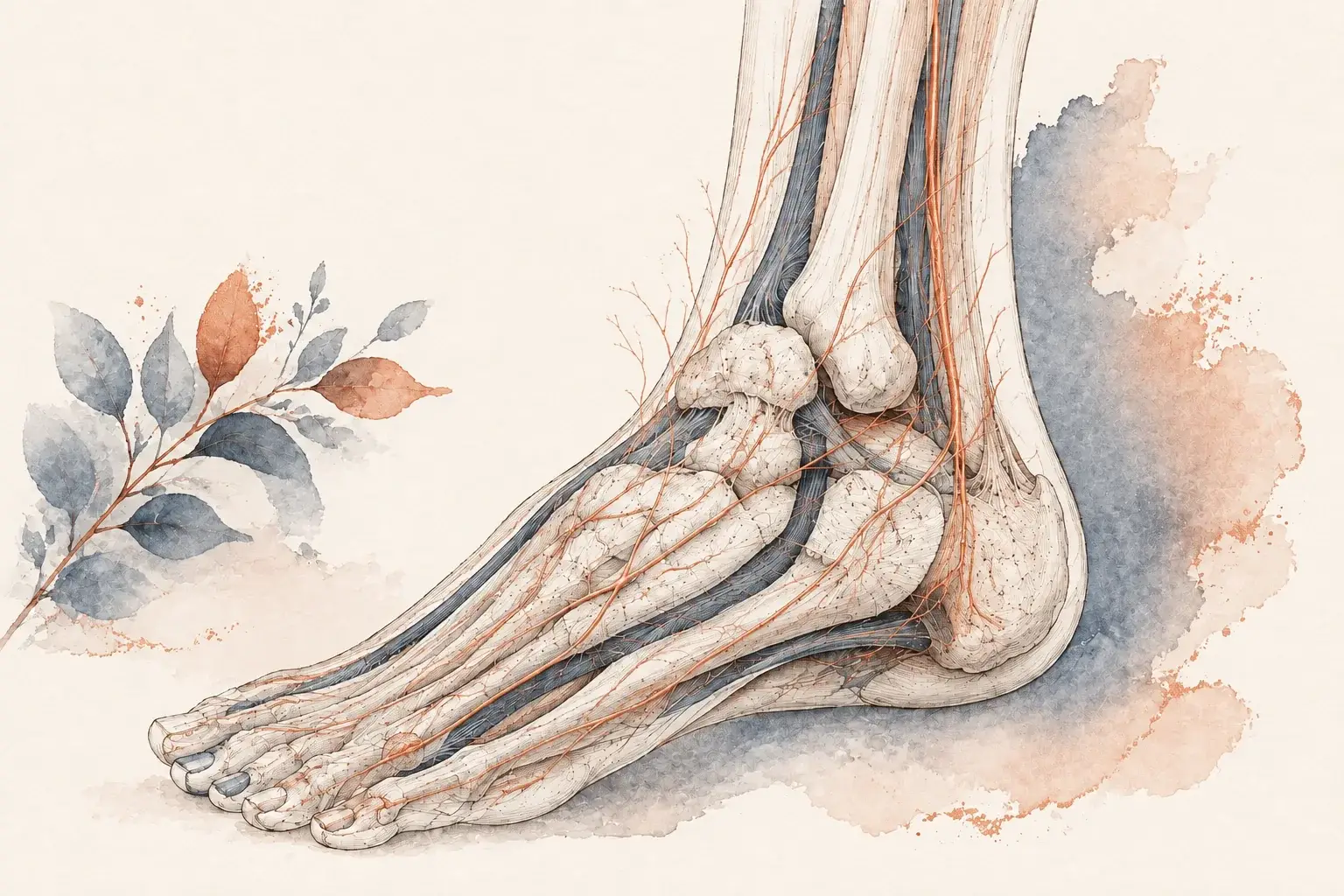
A closer look at the nerves in your feet
Peripheral nerves
These nerves carry messages between the spinal cord and the rest of the body.
Sensory nerve endings
Fine nerve endings help you feel touch, temperature, and pain.
Feet-first pattern
Many neuropathies cause symptoms in the toes and feet first. Other patterns are possible.
Common Symptoms of Neuropathy in Feet
Foot neuropathy can cause a wide range of sensations, from mildly annoying to severely debilitating. Symptoms often start subtly and progress over time.
Sensory Symptoms
- Numbness: Reduced ability to feel touch, pressure, or temperature
- Tingling: "Pins and needles" sensations that may come and go or be constant
- Burning pain: A hot, burning sensation often worse at night
- Sharp or stabbing pain: Electric shock-like sensations
- Hypersensitivity: Even light touch feels painful (allodynia)
- Strange sensations: Feeling like you're wearing socks when you're not, or walking on sand
Motor Symptoms
- Weakness: Difficulty lifting the front of your foot (foot drop)
- Muscle wasting: Thinning of muscles in the feet
- Difficulty walking: Unsteady gait or trouble with balance
- Foot deformities: High arches or hammer toes (in some hereditary neuropathies)
Autonomic Symptoms
- Dry feet: Reduced sweating in the feet
- Temperature changes: Feet that feel unusually cold or hot
- Skin changes: Shiny, thin skin or color changes
- Slow wound healing: Cuts and blisters take longer to heal

How foot neuropathy can feel
- Altered sensation: Numbness, tingling, or a pebble-like feeling can occur.
- Pain: Burning or stabbing discomfort may be worse at night.
- Protect the feet: Reduced sensation makes regular foot checks important.
Why Your Feet Feel Like Socks, Sponges or Sand
If your feet feel strange in a way that is hard to put into words, you are not imagining it. Each of these feelings is a clue to which nerve fibers are affected, and sometimes to a problem that is not neuropathy at all.
Why do my feet feel like I'm wearing socks?
Feeling as if you are wearing socks when your feet are bare is one of the most common early signs of neuropathy. It usually affects both feet evenly and starts at the toes, because the damage begins at the far ends of the longest nerves. Doctors call this pattern a length-dependent neuropathy. The dulled fibers are the ones that carry touch and vibration, so the floor feels muffled rather than gone.
A neurologist checks this directly: a tuning fork on the big toe for vibration, light touch on the skin, and the ankle reflexes, which often fade early.
One look-alike: a bunched-sock or pebble feeling under the ball of one foot only is more often a Morton's neuroma, a thickened nerve between two toes, than neuropathy.
Why do my feet feel spongy, like walking on sand or cotton wool?
A spongy, cushioned feeling, like walking on sand, sponges or cotton wool, means the soles have stopped reporting pressure and position clearly. This is large-fiber loss: the thick, fast nerve fibers that tell your brain where your feet are, and how firmly they meet the ground, carry less information. Vitamin B12 deficiency is a classic cause.
Because your eyes take over the job your feet used to do, balance is often worse in the dark or with your eyes closed. If spongy feet come with clumsy hands, neck pain or changes in bladder control, the spinal cord needs checking as well as the nerves.
Why do the soles of my feet feel like plastic or sandpaper?
A plastic or sandpaper feeling on the soles is another way damaged nerves misreport touch. Doctors call it dysesthesia: the floor or your sheets would feel normal to anyone else, but to you they feel coated, rough or gritty. It usually belongs to the same length-dependent neuropathy as the socks feeling and often comes with tingling or burning.
Nerve damage can also reduce sweating and leave the soles dry and cracked. That adds to the rough feeling, and it is the part that moisturizing can help.
Why do my feet burn or give electric shocks at night?
Burning, stabbing or electric-shock pain in the feet usually comes from the small nerve fibers that carry pain and temperature. It is often worst at night for ordinary reasons: there is less to distract you, your feet warm up under the covers, and the sheets keep touching skin that has become oversensitive.
A look-alike is restless legs syndrome: an uncomfortable urge to move the legs in the evening or at rest, which walking eases. Neuropathy pain is usually a burning or tingling that moving does not switch off, though the two can occur together.
Common Causes of Foot Neuropathy
Many conditions can damage the nerves in your feet. Identifying the underlying cause is essential for effective treatment.
Diabetes and Prediabetes
Diabetes is the leading cause of peripheral neuropathy in developed countries. High blood sugar damages nerves over time, particularly affecting the feet.
Key facts:
- Estimates range from about a third to two thirds of people with diabetes, depending on how neuropathy is defined; roughly half is the figure most often quoted
- Symptoms can appear before diabetes is diagnosed (prediabetes neuropathy)
- Tight glucose control can slow or prevent progression
Vitamin Deficiencies
Certain vitamins are essential for nerve health, and deficiencies can cause neuropathy:
- Vitamin B12: Most common vitamin-related cause; can be reversible with early treatment
- Vitamin B1 (thiamine): Often related to alcohol use or poor nutrition
- Vitamin B6: Can cause neuropathy from both deficiency AND excess
- Vitamin E: Rare but can cause sensory neuropathy
Alcohol Use
Chronic alcohol consumption can damage nerves through both direct toxicity and associated nutritional deficiencies. Alcoholic neuropathy typically affects the feet first and may improve with abstinence.
Autoimmune Conditions
Several autoimmune diseases that cause neuropathy can affect the feet:
- Guillain-Barré syndrome: Acute inflammatory neuropathy (can be severe)
- Chronic inflammatory demyelinating polyneuropathy (CIDP): Treatable with immunotherapy
- Vasculitic neuropathy: Related to blood vessel inflammation
- Sjögren's syndrome: Often causes small fiber neuropathy
Chemotherapy
Chemotherapy-induced peripheral neuropathy (CIPN) is a common side effect of many cancer treatments. It often starts in the feet and may persist after treatment ends.
Hereditary Conditions
Genetic disorders like Charcot-Marie-Tooth disease cause progressive neuropathy that typically begins in the feet during adolescence or early adulthood.
Kidney Disease
Uremic neuropathy occurs when kidney failure leads to toxin buildup that damages nerves.
Infections
Certain infections can cause or trigger neuropathy:
- Shingles (post-herpetic neuralgia)
- HIV
- Lyme disease
- Hepatitis C
Idiopathic (Unknown Cause)
In roughly a quarter to a third of cases, and in some series more, no specific cause is found despite thorough evaluation. This is called idiopathic neuropathy.
Small Fiber Neuropathy in the Feet
Small fiber neuropathy (SFN) deserves special attention because it often causes intense symptoms in the feet but doesn't show up on standard nerve tests.
Characteristics of SFN in the feet:
- Burning, stabbing, or electric-shock pain
- Symptoms often worse at night
- Normal EMG and nerve conduction studies
- May be associated with autonomic symptoms
If you have significant foot symptoms but normal standard testing, a small fiber skin biopsy can confirm the diagnosis.
Warning Signs That Need Immediate Attention
While most foot neuropathy develops gradually, certain symptoms require urgent evaluation:
- Rapid onset: Symptoms developing over days rather than weeks or months
- Severe weakness: Sudden inability to lift your foot or walk
- Spreading symptoms: Numbness rapidly moving up your legs
- Associated fever or illness: Could indicate infection or inflammatory condition
- Foot wounds that won't heal: Especially in diabetics
- Signs of infection: Redness, warmth, swelling around wounds
Urgent Warning
If weakness and numbness climb up your legs over hours or days, or breathing or swallowing gets hard, go to an emergency department or call 911. This can be Guillain-Barré syndrome, which needs hospital treatment.
One Foot or Both? What the Pattern Means
Where your symptoms sit is one of the strongest clues to their cause. The common kind of neuropathy affects both feet evenly, starting at the toes. Symptoms in one foot only usually come from a single nerve that is pinched or pressed somewhere along its path, which is a different problem with a different workup.
| Pattern | Likely source | Clue | Next step |
|---|---|---|---|
| Both feet, toes first, climbing slowly | Polyneuropathy, damage to many nerves at once | A socks feeling, burning at night | Read on: the tests and treatment below |
| One foot, or a stripe down one leg | A pinched nerve root in the low back (sciatica) | Back or buttock pain that changes with sitting or bending | Read about pinched nerves |
| Top of one foot, or a foot that slaps or drags | The peroneal nerve, pressed at the outside of the knee | Leg crossing, recent weight loss, a cast | A neurological exam |
| Sole of one foot, burning on standing | Tarsal tunnel syndrome, a nerve squeezed at the inner ankle | Worse after walking | A neurological exam |
| Ball of one foot, between the third and fourth toes | Morton's neuroma | A pebble feeling, worse in tight shoes | A podiatrist |
| Both feet plus clumsy hands, bladder changes or a band around the trunk | The spinal cord (MS, B12 deficiency, arthritis in the neck) | Can come on over days | A prompt neurological exam; see numb feet: MS or neuropathy |
| Cold, pale feet with calf pain on walking | Circulation, not nerves | The pain eases with rest | Your primary care doctor |
Diagnosing Foot Neuropathy
A comprehensive evaluation for foot neuropathy includes several components:
Medical History and Physical Exam
Your neurologist will ask detailed questions about:
- When symptoms started and how they've progressed
- Specific sensations you're experiencing
- Medical conditions, medications, and family history
- Alcohol use and nutritional factors
The neurological examination assesses:
- Sensation (light touch, vibration, temperature, pain)
- Reflexes (often reduced in neuropathy)
- Muscle strength
- Coordination and balance
Nerve Conduction Studies and EMG
These tests measure how well nerves conduct electrical signals:
- Can identify large fiber damage
- Help determine the type and severity of neuropathy
- May be normal in pure small fiber neuropathy
Small Fiber Skin Biopsy
The gold standard for diagnosing small fiber neuropathy:
- Minimally invasive procedure
- Measures nerve fiber density in the skin
- Important when EMG is normal but symptoms persist
If one is planned, our articles explain what the biopsy is like and how accurate the biopsy is, including what a normal result does and does not rule out.
Blood Tests
Screens for common causes:
- Blood sugar and HbA1c (diabetes)
- Vitamin B12 and other B vitamins
- Thyroid function
- Kidney and liver function
- Inflammatory markers
- Specific autoimmune antibodies
Additional Testing
Depending on findings:
- Genetic testing for hereditary neuropathies
- Lumbar puncture for inflammatory conditions
- Autonomic function testing
- Nerve ultrasound
Treatment Options
Treating the Underlying Cause
The most important step is addressing what's causing the neuropathy:
| Cause | Treatment Approach |
|---|---|
| Diabetes | Optimize blood sugar control |
| Vitamin deficiency | Supplementation |
| Autoimmune conditions | Immunotherapy |
| Alcohol-related | Abstinence, nutritional support |
| Medication-induced | Discontinue or change medications |
| Compression | Decompression, lifestyle changes |
Managing Neuropathic Pain
Several medications can help control foot pain:
Options your neurologist may discuss:
- Gabapentin
- Pregabalin
- Duloxetine
Other options:
- Tricyclic antidepressants (amitriptyline, nortriptyline)
- Topical lidocaine patches or cream
- Capsaicin cream (for localized pain)
Physical Therapy and Rehabilitation
- Balance training to prevent falls
- Strengthening exercises
- Gait training
- Assistive devices when needed
Lifestyle Modifications
- Foot care: Daily inspection, proper footwear, avoiding injury
- Exercise: Improves circulation and overall nerve health
- Nutrition: Balanced diet with adequate B vitamins
- Avoid toxins: Limit alcohol, stop smoking
Foot Care Tips for Neuropathy
When you can't feel your feet well, extra care is essential:
Daily Foot Inspection
- Check feet every day for cuts, blisters, or sores
- Use a mirror or ask someone to help check the bottoms
- Look for redness, swelling, or skin changes
Proper Footwear
- Wear well-fitting shoes with good support
- Avoid going barefoot, even indoors
- Check shoes for objects before putting them on
- Consider diabetic-specific footwear
Temperature Awareness
- Test bathwater with your elbow before stepping in
- Avoid heating pads or hot water bottles on feet
- Protect feet from cold temperatures
Moisturizing
- Keep skin moisturized to prevent cracking (not between toes)
- Use gentle, fragrance-free lotions
Professional Foot Care
- See a podiatrist regularly, especially with diabetes
- Have calluses and nails professionally trimmed
- Don't treat corns or calluses yourself

Protect feet when sensation is reduced
- Look regularly: Check the feet for cuts, blisters, or other changes.
- Choose protection: Wear appropriate footwear and avoid walking barefoot.
- Seek care for changes: New wounds or concerning symptoms deserve medical attention.
When to See a Neurologist
Consider an evaluation if you have:
- Persistent numbness, tingling, or burning in your feet
- Symptoms that are worsening over time
- Unexplained weakness or difficulty walking
- Foot symptoms with normal results from your primary doctor
- Known risk factors for neuropathy (diabetes, autoimmune disease, family history)
- Symptoms affecting your quality of life
Feet that burn at night or feel like pebbles underfoot are hard to live with, and many causes are treatable. In a 60-minute first visit, Dr. Achillefs Ntranos looks for those causes and tells you plainly what he finds and what comes next. Nerve studies are arranged at an outside facility, and a skin biopsy, when needed, is done in the Beverly Hills office. Follow-ups are usually every one to three months and last 30 minutes. Request a visit in Beverly Hills or Los Angeles, or by video anywhere in California. No referral is needed, and the office confirms within 1 business day.
Frequently Asked Questions
Take the First Step
If you're experiencing numbness, tingling, burning, or pain in your feet, getting an accurate diagnosis is the most important step you can take. Many causes of foot neuropathy are treatable, and early intervention offers the best outcomes.
Learn About Peripheral Neuropathy
Explore our comprehensive guide to all types of peripheral neuropathy.
Small Fiber Testing
Learn about gold-standard testing for small fiber neuropathy in Los Angeles.
Request a visit
See Dr. Ntranos in Beverly Hills or Los Angeles, or by video anywhere in California.
References
- Johns Hopkins Medicine. Peripheral neuropathy.
- National Institute of Neurological Disorders and Stroke. Peripheral Neuropathy, 2026.
- Pop-Busui R, et al. Diabetic Neuropathy: A Position Statement by the American Diabetes Association. Diabetes Care, 2017.
- American Academy of Neurology. Oral and Topical Treatment of Painful Diabetic Polyneuropathy: Practice Guideline Update Summary. Neurology, 2022.