
Headache is the most common reason people see a neurologist, and most of what decides the diagnosis is in the story: how the headaches began, what they feel like, what comes with them, and what has already been tried. So a first visit here is 60 minutes, covers the questions that usually get skipped, and ends with a written plan you understand.
Which headache do you have?
Getting the type right is most of the treatment, because the types respond to different things.
| Type | How it typically feels | What it usually needs |
|---|---|---|
| Migraine | Throbbing, often one-sided, worse with movement, with nausea or light and sound sensitivity. Hours to days | Acute treatment, plus a preventive once attacks are frequent |
| Tension-type | A steady band of pressure on both sides, mild to moderate, without nausea | Simple acute treatment, and a look at sleep, posture, and stress |
| Cluster | Severe, one-sided, around the eye, in daily bouts, often with a watering eye or blocked nostril | Its own acute and preventive treatments. Ordinary painkillers do not work |
| Medication-overuse | Near-daily background headache in someone taking pain relievers most days | A supervised plan to reduce the pain reliever while a preventive takes over |
| Post-traumatic | Migraine-like or pressure-like, starting after a concussion | Treatment for the headache type it resembles, plus recovery pacing |
| Trigeminal neuralgia | Brief electric-shock facial pain set off by touch, chewing, or wind | Specific nerve-pain medication, not headache treatment |
More than one can be present at once, which is the usual reason a treatment that should work does not. Our headache guide goes through the types in more detail.
Headaches that need an emergency department, not an appointment
The worst headache of your life coming on within seconds, a headache with fever and a stiff neck, headache with new weakness, confusion, or loss of vision, or a headache after a head injury that keeps worsening. Go now rather than waiting to be seen. Our article on when to worry about a headache covers the less obvious warning signs.
Visual guide
The pattern behind a headache
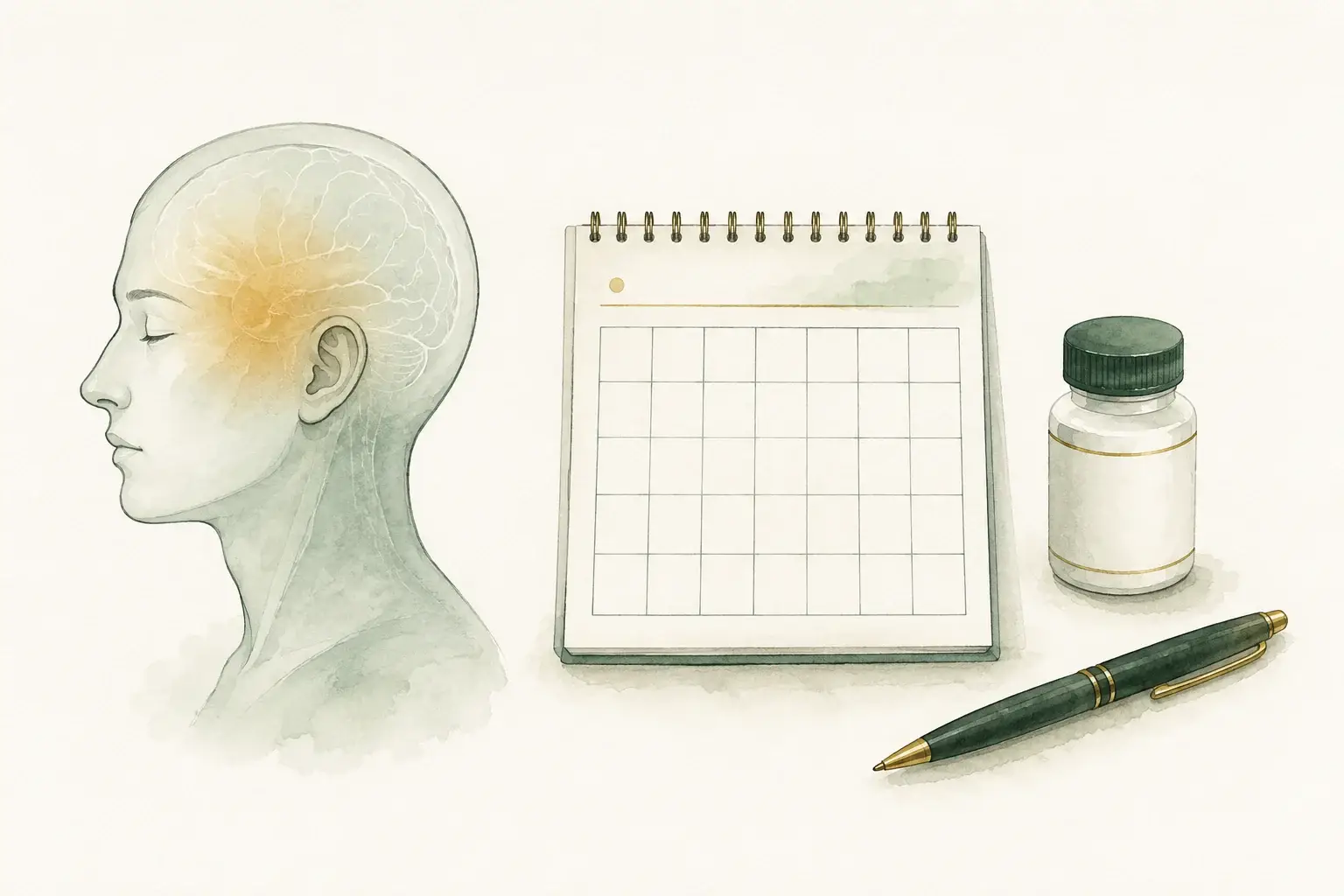
- Describe: where it hurts, what it feels like and what comes with it.
- Track: record attack timing, frequency and possible triggers.
- Review: list treatments tried and how often you use pain relievers.
How we reach a diagnosis
The history
When the headaches started, what they feel like, what comes with them, what you have tried, your sleep and family history, and exactly how often you reach for a pain reliever. Most of the diagnosis is in those answers.
The examination
A neurological examination, in the office or structured for video, looking for any sign that another condition, rather than a headache disorder such as migraine, is causing the pain.
Imaging, only when indicated
Most headaches do not need an MRI. Some clearly do, and we say which and why. When it is indicated we order it promptly and review the images with you.
Tests for a contributing cause
Blood tests when thyroid disease, anemia, or inflammation is possible. A home sleep study when snoring or morning headaches point to sleep apnea, a common and treatable driver of chronic headache.
A headache diary
On paper, such as our printable headache diary, or on your phone. Over a few weeks it usually shows a pattern that no single visit can, and it is what we adjust the plan against.
Anatomy at a glanceUnderstanding migraine
A closer look at migraine pain
Migraine involves changes in how the nervous system processes pain and other sensations.
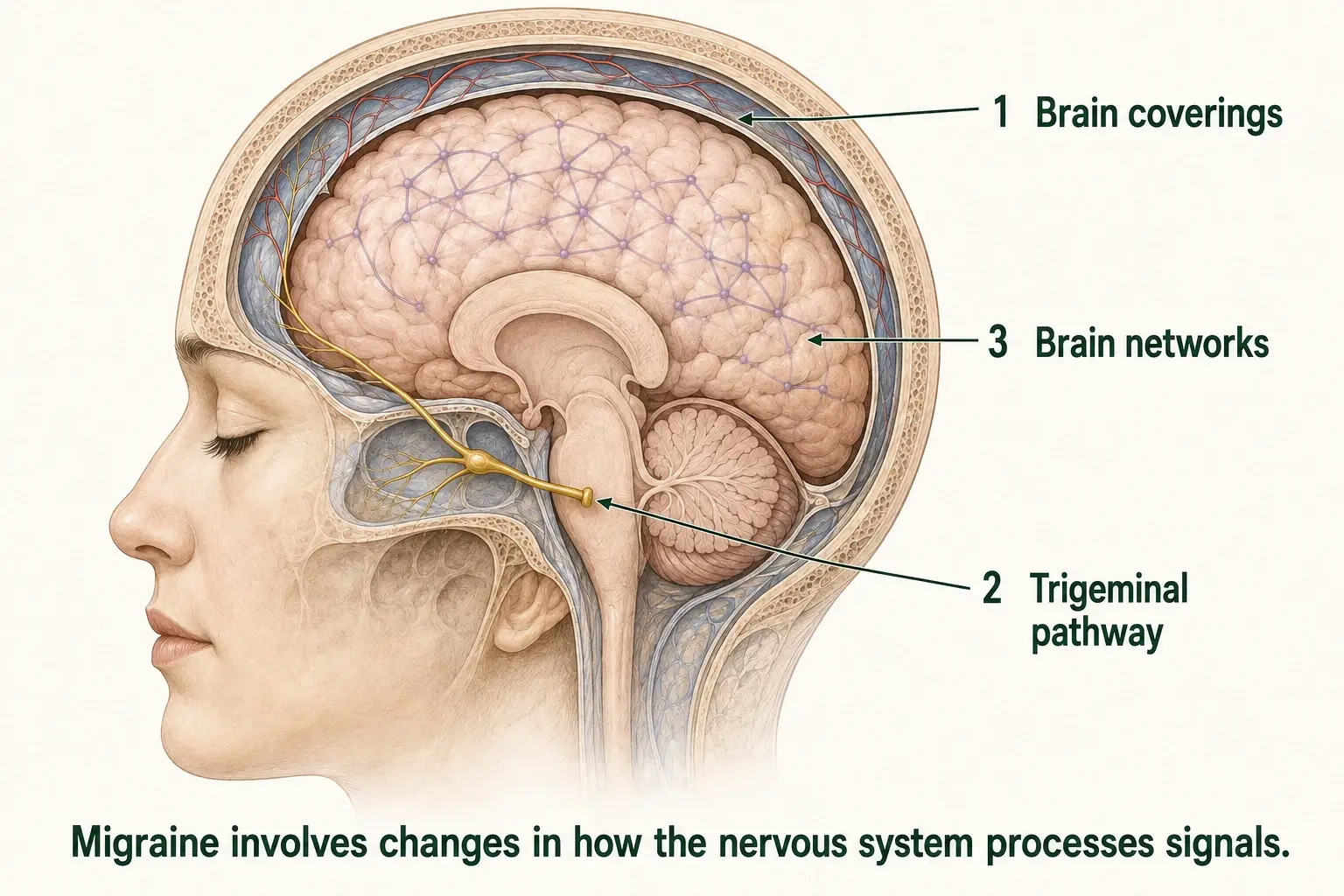
Brain coverings
The tissues around the brain contain pain-sensitive nerve endings.
Trigeminal pathway
This nerve pathway carries pain signals from structures in the head toward the brainstem.
Brain networks
Connected brain regions process pain and other sensations during an attack.
Migraine is diagnosed from the symptom pattern. A normal scan does not rule it out.
A simplified view of one pain pathway, not a complete explanation of migraine or a diagnostic scan.
Treatment, and who each option suits
The plan depends on the diagnosis, how often the headaches come, and what you have already tried. It is written down and revisited at 30-minute follow-up visits, in person or by video, where we adjust it against your headache diary.
| Option | Who it suits |
|---|---|
| Acute treatment | Anyone with attacks. Chosen to work quickly without setting up rebound headache |
| Preventive treatment, from daily medications to the newer migraine-specific options | Attacks frequent or disabling enough to justify prevention, or older preventives that failed or were not tolerated |
| A medication-overuse plan | Near-daily headache in someone using pain relievers most days of the week |
| Trigger and routine work | Everyone. Sleep, caffeine, meals, hormones, weather, and screen time all move attack frequency |
We do not perform botulinum toxin injections for chronic migraine at our offices. When that is the right next step we say so and refer you to a colleague who does them.
For Southern California patients, the local triggers from Santa Ana winds to wildfire smoke are worth knowing, and our migraine guide covers the non-medication strategies that have evidence behind them.
Visual guide
A headache plan you can follow
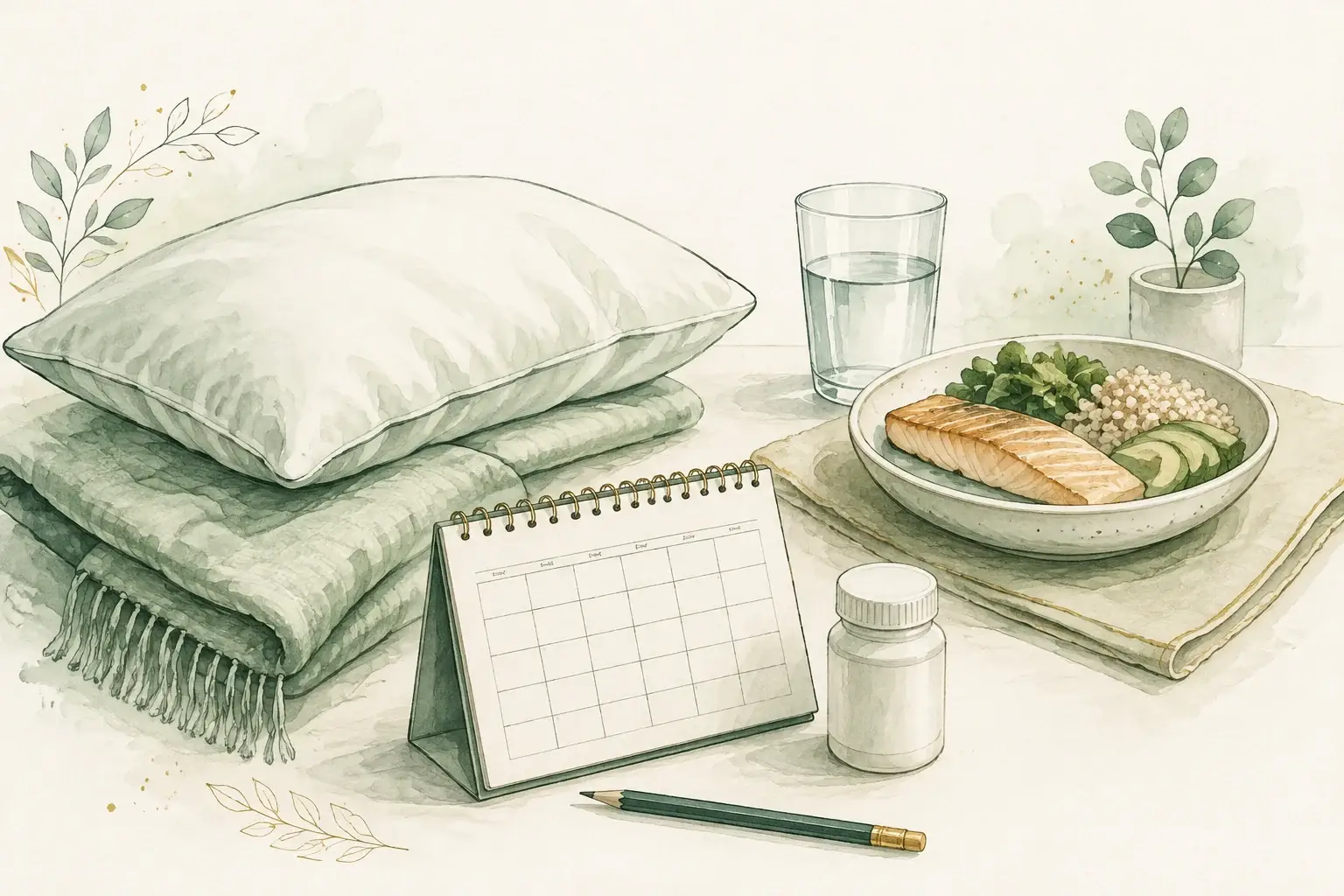
- Acute treatment: discuss how to manage individual attacks.
- Prevention: consider it when headaches are frequent or disabling.
- Routine: review sleep, meals, caffeine and medication use.
When to see a neurologist, and how to request a visit
See one if your headaches are getting more frequent, if they are disabling, if over-the-counter medication has become a routine, if a preventive has failed, or if the pattern has changed. Dr. Ntranos trained at Mount Sinai in New York, completing his neurology residency as Chief Resident and a fellowship in multiple sclerosis, and later served there as an Assistant Professor before founding this clinic in 2022.
We are a direct-pay practice and do not bill insurance for visits. One flat fee covers the visit, with no facility charges. You receive a superbill afterwards, and most PPO plans reimburse 50–80%, depending on out-of-network benefits and deductible. Prescriptions, imaging, and laboratory tests still run through your insurance, and we handle the prior authorizations. Details are on our billing page.
Planning your week around the next headache is exhausting. A 60-minute first visit with Dr. Ntranos, in person in Beverly Hills or Los Angeles or by video anywhere in California, ends with a written plan. Follow-ups are usually every one to three months and last 30 minutes. Request a visit; no referral is needed, and the office confirms your request within 1 business day.
Frequently asked questions
References
- American Migraine Foundation. What to expect from a first-time visit to a headache specialist.
- National Institute of Neurological Disorders and Stroke. Headache.
- International Headache Society. The International Classification of Headache Disorders, 3rd edition.
- American Migraine Foundation. Understanding the new anti-CGRP treatments.