
Someone you know changed over a few weeks. Their memory slipped, their personality shifted, they became confused, paranoid, or agitated, or they had a seizure for the first time as an adult. A doctor may have said dementia, or a psychiatric illness, and it did not sit right, because it all happened so fast.
That speed is the point of this article. When memory, behavior, or thinking changes over weeks rather than years, one of the conditions a neurologist has to consider is autoimmune encephalitis: the immune system attacking the brain. It is treatable, and the diagnostic criteria were written so that recognition does not have to wait for a laboratory result that can take weeks to come back. If someone is getting worse over hours or days, or has had a first seizure, call 911 or go to the emergency department now.
What autoimmune encephalitis is
Encephalitis means inflammation of the brain. Infections can cause it, but in autoimmune encephalitis the cause is the body's own immune system. Most often, antibodies form against a protein on the surface of brain cells, such as the NMDA receptor, LGI1, or CASPR2, and interfere with how those cells signal. Sometimes the trigger is a tumor elsewhere in the body, sometimes a recent infection, and often no trigger is found.
Most of these conditions were described only in the last twenty years. Before that, many people with them were diagnosed with a psychiatric illness, unexplained epilepsy, or a rapidly progressive dementia. Our autoimmune conditions page places encephalitis among the other conditions in which the immune system turns on the nervous system.
Symptoms: what changes, and how fast
The symptoms depend on which part of the brain is inflamed, and the inner temporal lobe, the memory region, is a common target. What families describe most often:
| Area | What people notice |
|---|---|
| Memory | New information does not stick. Repeated questions, lost track of days, forgotten conversations, over weeks |
| Thinking and alertness | Confusion, slowed or muddled thinking, unusual drowsiness or agitation |
| Behavior and mood | Personality change, paranoia, hallucinations, severe anxiety, or a first psychiatric episode in someone with no history |
| Seizures | A first seizure in an adult, or brief repeated spells such as one-sided facial twitching or moments of blankness |
| Movement and sleep | Abnormal movements, disturbed sleep, or changes in blood pressure, heart rate, and temperature control in severe cases |
No single symptom on that list is specific. Memory loss, seizures, and psychiatric change each have many causes. What sets autoimmune encephalitis apart is that several of them arrive together, and that the whole picture develops in less than three months, usually days to weeks.
Why the speed of change matters
In 2016 an international panel of neurologists published consensus criteria for diagnosing autoimmune encephalitis. They wrote the speed of onset into the definition itself. To meet the criteria for possible autoimmune encephalitis, all three of the following must be present:
- Subacute onset, meaning rapid progression over less than three months, of working memory problems, altered mental status, or psychiatric symptoms.
- At least one supporting finding: new focal signs on the neurological examination; seizures not explained by a known seizure disorder; an elevated white cell count in the spinal fluid (more than five cells per cubic millimeter); or MRI features suggestive of encephalitis.
- Reasonable exclusion of other causes, such as infection, a metabolic problem, medication effects, or a tumor.
In plain language: a change in memory, thinking, or behavior that arrived over weeks, plus one objective finding that points to the brain, once the obvious alternatives have been checked, is enough to call the diagnosis possible and to act on it. The criteria then define "probable" and "definite" categories as more evidence arrives, including specific antibody results.
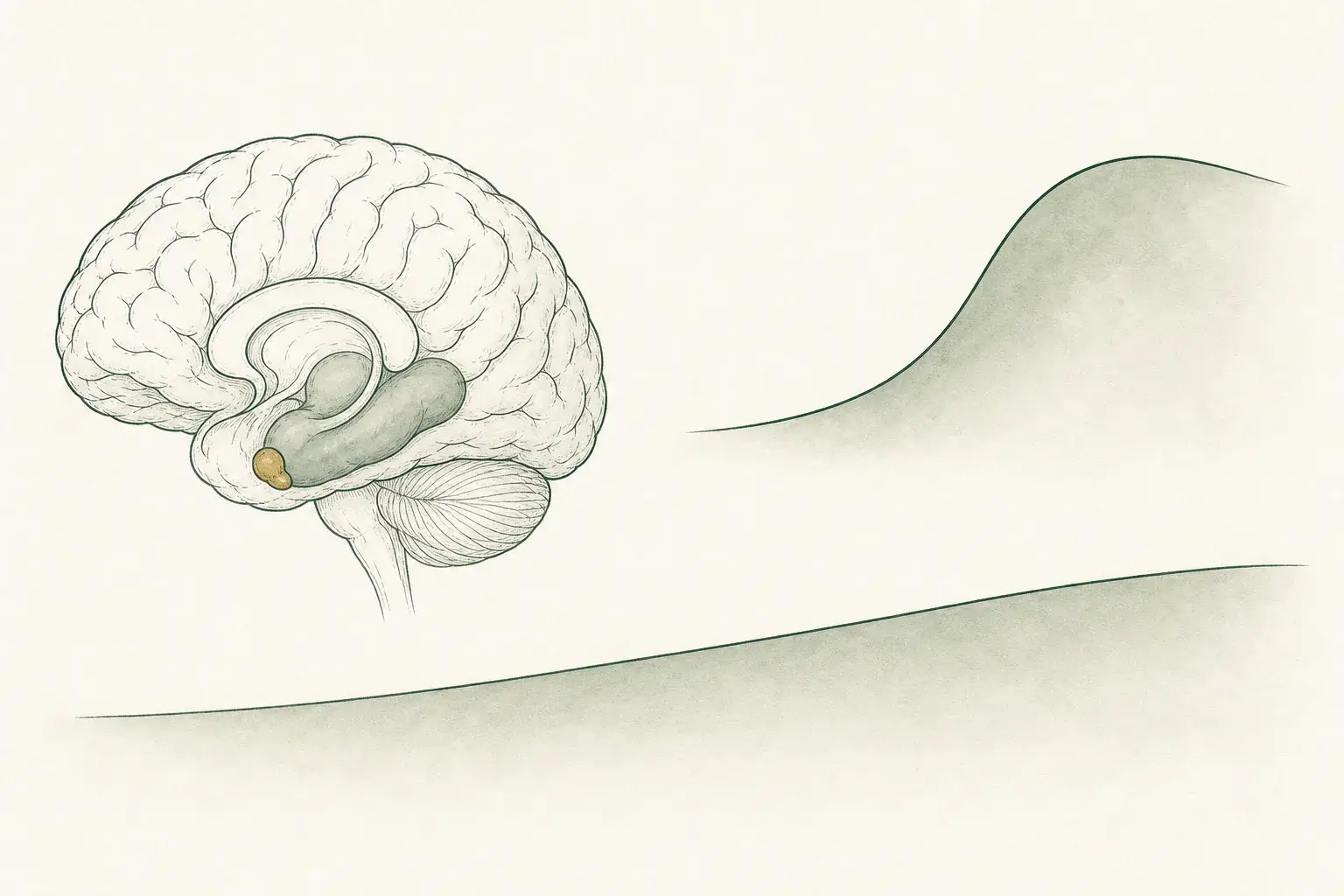
Tempo is the clue
- Weeks, not years: Autoimmune encephalitis develops over days to weeks, in under three months.
- Years, not weeks: Degenerative dementias build gradually over years.
- Same symptoms, different clock: Memory loss and behavior change appear in both. The pace separates them.
Why the diagnosis does not wait for antibody results
Notice what is missing from the list above: an antibody test. That was deliberate. The panel wrote that earlier approaches were "too reliant on antibody testing and response to immunotherapy, which might delay the diagnosis," and that antibody testing "is not readily accessible in many institutions and results can take several weeks to obtain."
The panels are sent to a small number of reference laboratories, and a result can take two to four weeks. If treatment waited for it, people would spend those weeks getting worse. So the criteria were built to work without it: a subacute picture plus one supporting finding is already enough to arrange MRI with contrast, a spinal fluid test, an EEG if there are spells, and a neurology opinion, and in many cases to start immunotherapy, with the antibody panel running in parallel rather than first.
For a family, the practical translation is this. If the change arrived over weeks and a doctor is waiting for an antibody result before doing anything else, it is reasonable to ask why.
A negative panel does not close the question. Antibody-negative autoimmune encephalitis exists, and it is diagnosed on the clinical picture, the MRI, and the spinal fluid. If the tempo and the supporting findings fit, a negative panel changes the label, not the plan.
A positive antibody does not make the diagnosis on its own. A result that does not fit the time course or the rest of the findings has to be read against them. The antibody has to agree with the clinical picture rather than replace it. That is why a positive result found incidentally, or in someone whose story does not match, is a reason for a specialist review rather than for immediate treatment.
Conditions it is mistaken for
| Often labeled as | What points back toward an autoimmune cause |
|---|---|
| Dementia (Alzheimer's or another degenerative disease) | Onset over weeks rather than years, often with seizures or inflammatory changes in the spinal fluid or on MRI |
| A first psychiatric illness (psychosis, mania, severe anxiety) | No prior psychiatric history, plus memory loss, confusion, seizures, abnormal movements, or a poor response to psychiatric medication |
| Epilepsy with an unknown cause | New adult-onset seizures that resist standard medication, arriving together with memory or personality change |
| Delirium from infection or medication | The confusion persists after the supposed cause is treated, or no cause is found |
Our pages on memory loss, cognitive symptoms, and epilepsy cover the more common explanations for each of those labels. The point is not that every fast change is autoimmune. Most are not. The point is that a fast change deserves the question, and the question has a defined answer.
How autoimmune encephalitis is diagnosed
In the acute phase, when someone is rapidly worsening, this is a hospital condition, and the evaluation happens there. An outpatient neuroimmunology evaluation fits the weeks before, when the question is whether a change deserves an autoimmune workup, and the months after, when immunotherapy needs managing or a label of dementia or epilepsy has never quite fit. Either way, the evaluation follows the same logic as the criteria:
The history, from the beginning
How the symptoms began and evolved week by week, infections in the weeks before, autoimmune disease in the family, any cancer history, and what has already been tried. The examination looks for focal signs that separate an inflammatory process from a degenerative one.
MRI of the brain with contrast
Inflammation of the inner temporal lobes is a classic finding, though the MRI can be normal, especially early. A normal scan does not exclude the diagnosis.
Spinal fluid
A lumbar puncture looks for an elevated white cell count and other signs of immune activity inside the nervous system. It also rules out infection, which is the most important alternative to exclude.
EEG when spells are suspected
Seizures in autoimmune encephalitis can be subtle, and an EEG can show seizure activity or a characteristic pattern of slowing.
Antibody panels, sent to the right laboratory
Blood and spinal fluid are tested for the antibodies that define the specific syndromes. The results confirm and refine the diagnosis; they do not start it.

The evaluation runs in parallel
- Imaging and spinal fluid: These can support the diagnosis within days.
- Antibody panels: Sent to reference laboratories; results take weeks and confirm the specific syndrome.
- Written plan: What the findings support, what they do not, and what would settle any open question.
Treatment, briefly
Treatment is immunotherapy: first-line treatments that calm the immune attack quickly, such as high-dose corticosteroids, intravenous immunoglobulin, or plasma exchange, and second-line treatments that suppress the responsible immune cells when the first line is not enough. If a tumor is driving the process, treating it is part of treating the encephalitis. Seizures, sleep, mood, and movement symptoms are treated in their own right, and many people need rehabilitation and months of follow-up while immunotherapy is adjusted and eventually reduced.
Two facts about treatment are worth holding onto. Most people improve, some substantially. And recovery is better the earlier treatment starts, which is the whole reason the criteria are built around tempo rather than around a laboratory result.
When to seek help
When not to wait for an appointment
Rapidly worsening confusion, a first seizure, a sudden change in alertness, or new weakness spreading over hours need emergency evaluation. Call 911 or go to the nearest emergency department. We are glad to take over the care afterwards.
Outside an emergency, consider an evaluation if memory, personality, or thinking changed over weeks rather than years, if an adult has had new seizures alongside memory or psychiatric change, if a diagnosis of dementia or a psychiatric illness has never quite fit the speed of what happened, or if someone discharged from hospital on immunotherapy needs it managed. Seeing someone change this fast is frightening; what you noticed is the clue. Dr. Ntranos, a board-certified neurologist with fellowship training in demyelinating diseases and postdoctoral research in neuroimmunology, offers an autoimmune neurology evaluation as a 60-minute first visit, in person in Beverly Hills or Los Angeles, or by video anywhere in California. The evaluation ends in a written plan: what the findings support and what would settle the rest. Follow-ups are usually every one to three months and last 30 minutes. Upload the timeline, records, and any prior imaging ahead through our patient tools page, or give us the other doctors' names and dates of service and the office will request them. Request a visit; no referral is needed, and the office confirms within 1 business day.
Frequently asked questions
References
- Graus F, Titulaer MJ, Balu R, et al. A clinical approach to diagnosis of autoimmune encephalitis. The Lancet Neurology, 2016;15:391-404.
- Dalmau J, Graus F. Antibody-mediated encephalitis. New England Journal of Medicine, 2018;378:840-851.
- Abboud H, Probasco JC, Irani S, et al. Autoimmune encephalitis: proposed best practice recommendations for diagnosis and acute management. Journal of Neurology, Neurosurgery and Psychiatry, 2021;92:757-768.
- National Institute of Neurological Disorders and Stroke. Meningitis and encephalitis.