If a lab report has just told you your vitamin D is low, it is natural to wonder whether that matters for your multiple sclerosis, and whether taking more would help.
Low vitamin D is linked to a higher chance of developing MS and to more disease activity in people who have it, so checking your level and correcting a low one is part of good MS care. Whether extra vitamin D changes the course of the disease is less certain. A trial published in 2025 found a modest benefit in people at their first MS episode who had not started treatment, seen mostly on MRI. Trials that added vitamin D to an MS medicine have not reliably reduced relapses. Vitamin D does not replace a disease-modifying therapy, and more is not better.
Is low vitamin D linked to MS?
Yes, and the link shows up in three different kinds of evidence.
- Where people live. MS is more common the farther people live from the equator, a pattern researchers tie to environmental factors such as sun exposure. Skin makes vitamin D in sunlight.
- Genes. People who inherit gene variants that lower their vitamin D level are more likely to develop MS. That suggests vitamin D itself plays a part in risk, rather than simply traveling with other habits.
- Disease activity. In people who already have MS, lower levels go with more new lesions on MRI. In a large group followed for five years from a first MS-like episode, low levels in the first year predicted more disease activity and faster progression.
A link is not proof of cause, though. People who feel unwell may spend less time outdoors, for example, which is why randomized trials matter.
What happens when people with MS take more vitamin D?
The trials so far ask three different questions: is a high dose safe, does it help early MS before any treatment, and does it add anything to an MS medicine. The answers differ, which is why the evidence can look contradictory.
Is a high daily dose safe?
During my postdoctoral fellowship in neuroimmunology at Johns Hopkins, I was one of the authors of a small trial run there, published in Neurology in 2016. Forty people with relapsing-remitting MS, all on a stable MS medicine, took either a high or a low daily dose of vitamin D3 for six months without knowing which. The high dose raised blood levels much more. Side effects were minor and no different between the groups. The high dose also lowered the share of several inflammatory immune cells linked to MS; the low dose did not.
It was a pilot study, built to check safety and immune effects rather than relapses: a signal about the immune system, not proof that patients do better.
Does vitamin D help early MS before treatment?
D-Lay MS, published in JAMA in 2025, tested this directly. At 36 MS centers in France, 316 people who had just had a first episode typical of MS, known as clinically isolated syndrome, and had not started any MS treatment took either a high dose of vitamin D every two weeks or a placebo for two years. All had a vitamin D level below the study's cutoff.
Over the two years, about 6 in 10 people on vitamin D showed new disease activity, meaning a relapse or new activity on MRI, compared with about 7 in 10 on placebo. The activity also took longer to appear.
The effect sat mainly on the MRI. New lesions, and lesions that light up with contrast, were clearly less common with vitamin D. Relapses were only slightly less common, a difference small enough to be chance. The results held in people who already met the criteria for relapsing MS. Severe side effects occurred in both groups, and none was attributed to vitamin D. Our guide to understanding your MS brain MRI explains what new and enhancing lesions mean.
The authors concluded that the results warrant further study, including of high-dose vitamin D added to MS treatment.
Does it add anything to an MS medicine?
If you already take a disease-modifying therapy, this is the question that matters, and so far the answer is mostly no.
- VIDAMS, a US trial at 16 clinics, gave 172 people with relapsing-remitting MS on glatiramer acetate a high or a low daily dose of vitamin D3 for nearly two years. Relapses were no less common with the high dose: about a third of each group had one.
- A 2024 review that pooled nine add-on trials with 867 participants found no significant effect on relapse rate, disability scores or new MRI lesions. New lesions trended lower, which the authors said needs confirming.
- A 2026 analysis of nine studies reached the same overall conclusion: vitamin D raised blood levels reliably but did not significantly change relapse rates or disability.
Why the results differ
The trials studied different people. D-Lay MS treated people at the very start of the disease with no other treatment. In the add-on trials an MS medicine was already controlling much of the inflammation, leaving less for vitamin D to add and making a small extra effect harder to detect. Doses, schedules and starting levels also varied.
None of these trials tested vitamin D in place of an MS medicine, so the evidence does not support using it instead of one. Our guide to MS treatment and how to know it is working explains why starting an effective therapy early matters.
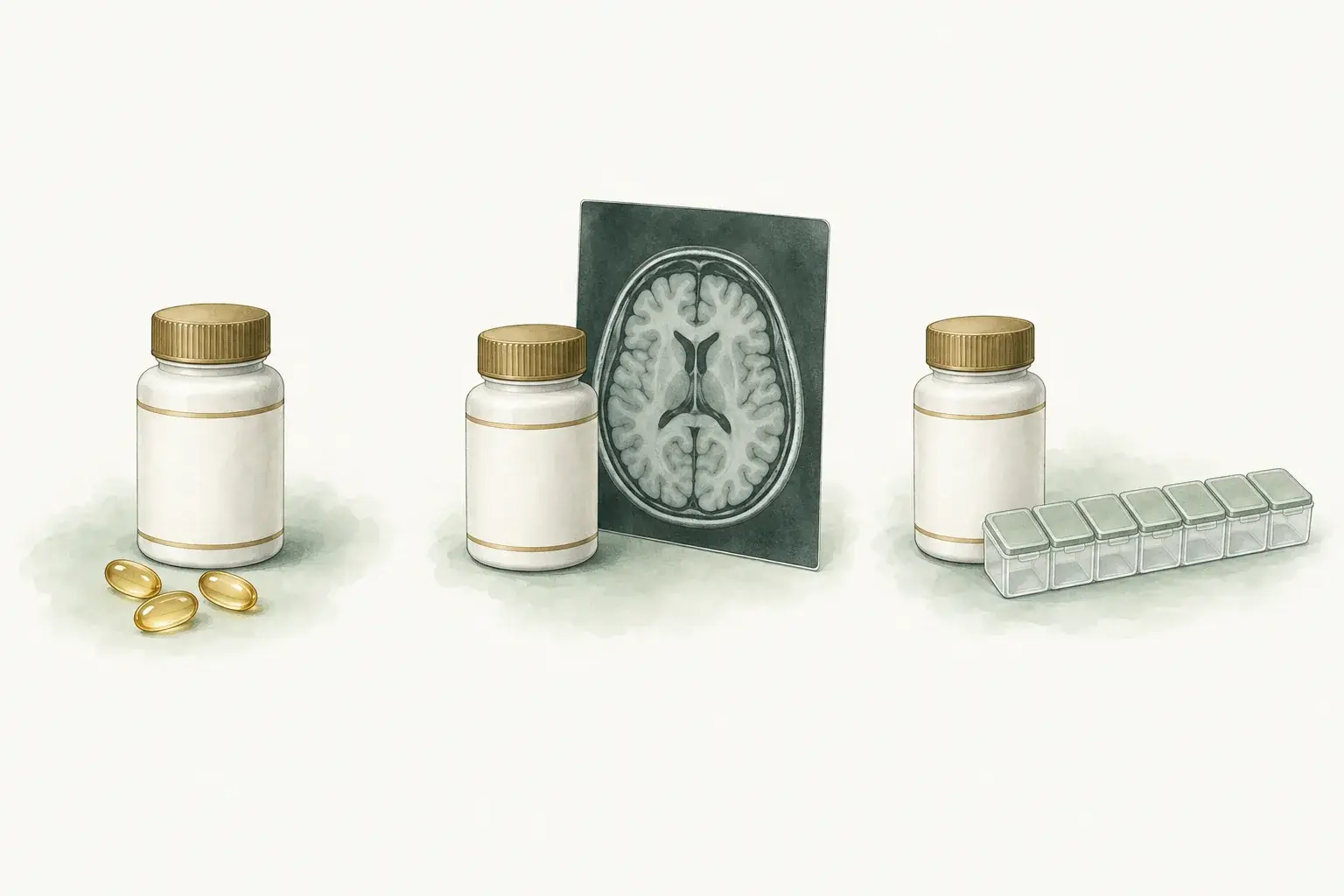
Three questions the vitamin D trials asked
- Is a high dose safe? A small 2016 trial found a high daily dose safe for six months with monitoring.
- Does it help early, untreated MS? D-Lay MS found somewhat less new activity, mostly on MRI.
- Does it add to an MS medicine? Add-on trials have not reliably reduced relapses.
How much vitamin D is too much?
Vitamin D is fat-soluble, so the body stores it in fatty tissue and the liver, and an excess can build up. Too much makes the gut absorb too much calcium, and high blood calcium can cause nausea, vomiting, constipation, weakness, confusion, kidney damage and kidney stones. Vitamin D toxicity almost always comes from taking too many supplements.
The high doses in these trials were given under medical supervision, with regular study visits. In the 2016 trial, one person on the high dose had a slightly high calcium level at the halfway visit and stopped, as the study rules required. Taking a high dose on your own has no such safety net.
Some medicines, including steroids, also affect vitamin D levels, so tell your neurologist about everything you take, including multivitamins.
How we handle vitamin D at our MS clinic
Here is how I approach it. I check the vitamin D level along with the rest of the MS blood work, because the number decides everything that follows. If it is low, we agree on a supplement dose based on that result, aiming for the normal to high-normal range, and I recheck the level a few months later to make sure it has landed there. I do not use megadoses.
The test is a simple blood draw for 25-hydroxyvitamin D, the most accurate way to see whether you have enough. If you already take vitamin D, bring the label to your visit, and mention any history of kidney stones.
It is hard to get enough vitamin D from food alone, because very few foods naturally contain it; our guide to the best diet for MS covers eating well with MS. Sunshine is not a dependable fix either, even in Southern California: how much vitamin D skin makes varies greatly from person to person, and sun exposure without sunscreen raises the risk of skin cancer.
Ask about your level at your next visit if it has never been checked, if you take vitamin D without a recent blood test, or if you are planning a pregnancy.
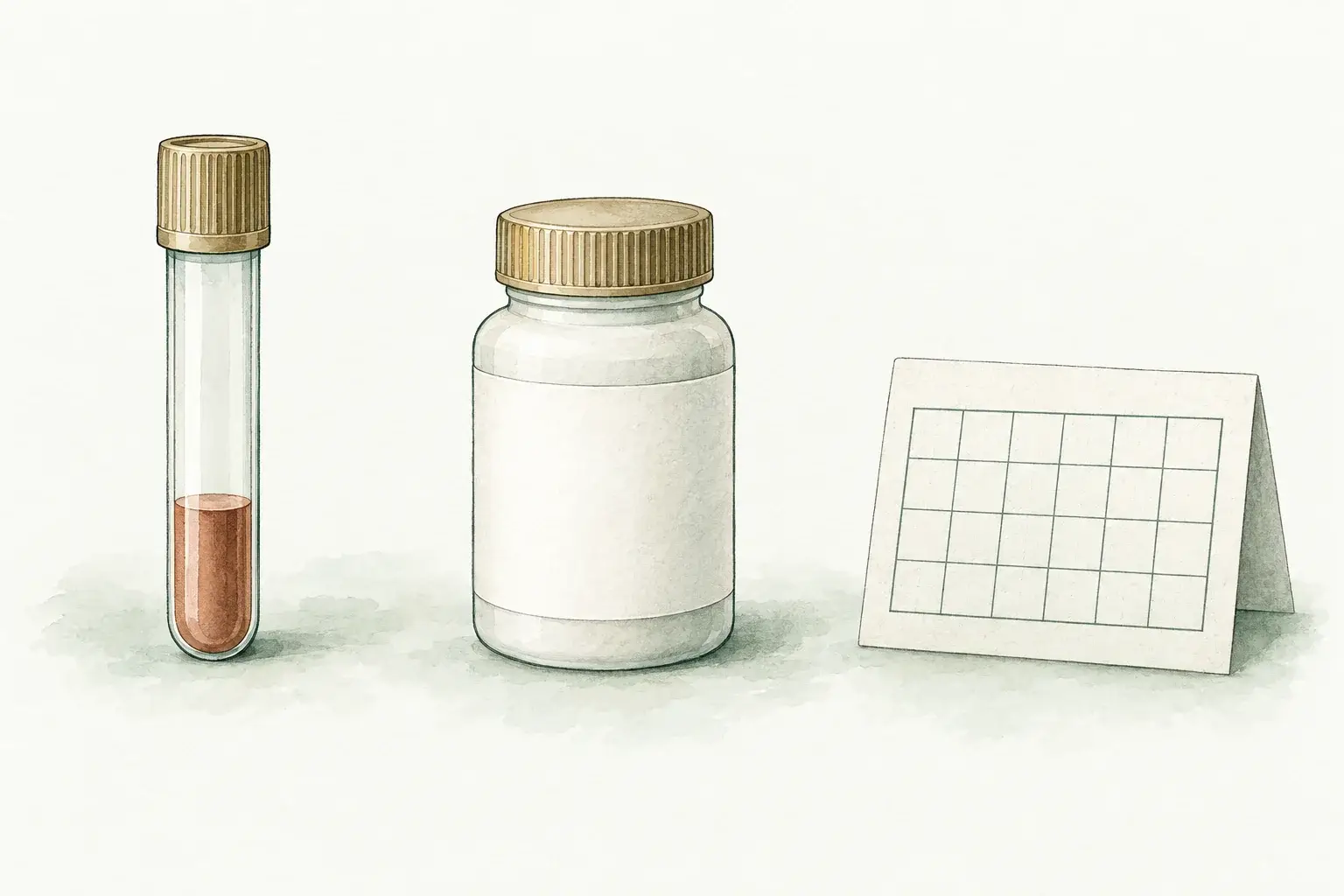
Know your number before you change your dose
- Test first: a 25-hydroxyvitamin D blood test shows where your level stands.
- Set the dose with your neurologist: the right amount depends on your result and your other medicines.
- Recheck and avoid megadoses: too much vitamin D raises calcium and can cause kidney stones.
Vitamin D is one of ten areas in our guide to lifestyle changes that protect brain health in MS, alongside exercise, sleep and not smoking. A low vitamin D level, and trials that seem to disagree, can leave you unsure what to do. If you are in California, an MS specialist at our MS clinic can look at your result alongside the rest of your plan, so the next step follows your number rather than a guess. The first visit is 60 minutes, in person in Beverly Hills or Los Angeles, or by video anywhere in the state, and follow-ups are usually every one to three months and last 30 to 45 minutes. If your diagnosis is new or uncertain, a full MS evaluation is the place to start. Request a visit; no referral is needed, and the office confirms within 1 business day.
Frequently asked questions
References
- Thouvenot E, et al. High-Dose Vitamin D in Clinically Isolated Syndrome Typical of Multiple Sclerosis: The D-Lay MS Randomized Clinical Trial. JAMA, 2025.
- Sotirchos ES, et al. Safety and immunologic effects of high- vs low-dose cholecalciferol in multiple sclerosis. Neurology, 2016.
- Cassard SD, et al. High-dose vitamin D3 supplementation in relapsing-remitting multiple sclerosis: a randomised clinical trial. eClinicalMedicine, 2023.
- Mahler JV, et al. Vitamin D3 as an add-on treatment for multiple sclerosis: A systematic review and meta-analysis of randomized controlled trials. Multiple Sclerosis and Related Disorders, 2024.
- Zhang Y, et al. Vitamin D deficiency and multiple sclerosis relapse: a meta-analysis. Frontiers in Neurology, 2026.
- Mowry EM, et al. Vitamin D status predicts new brain magnetic resonance imaging activity in multiple sclerosis. Annals of Neurology, 2012.
- Ascherio A, et al. Vitamin D as an early predictor of multiple sclerosis activity and progression. JAMA Neurology, 2014.
- Mokry LE, et al. Vitamin D and Risk of Multiple Sclerosis: A Mendelian Randomization Study. PLOS Medicine, 2015.
- Simpson S, et al. Latitude continues to be significantly associated with the prevalence of multiple sclerosis: an updated meta-analysis. Journal of Neurology, Neurosurgery and Psychiatry, 2019.
- MedlinePlus, US National Library of Medicine. Vitamin D.
- MedlinePlus, US National Library of Medicine. Vitamin D Test.