
Most headaches are not dangerous. A few warning signs, listed below, mean you should go to the emergency department today. Everything else, even frequent or severe headaches, needs a plan with a neurologist rather than panic.
Red flags: call 911 or go to the emergency department
- Thunderclap onset. A headache that goes from nothing to maximal in under a minute needs urgent imaging to exclude bleeding.
- Fever and a stiff neck alongside the headache. Infection around the brain must be ruled out.
- New neurologic deficits. Weakness, slurred speech, confusion, double vision, or a seizure with the headache.
- First or worst-ever headache after 50, especially with jaw pain when chewing or tenderness at the temples.
- Head injury followed by worsening headache, vomiting, or drowsiness.
If none of those apply, your headache is very unlikely to be an emergency. That is different from saying it doesn't matter.
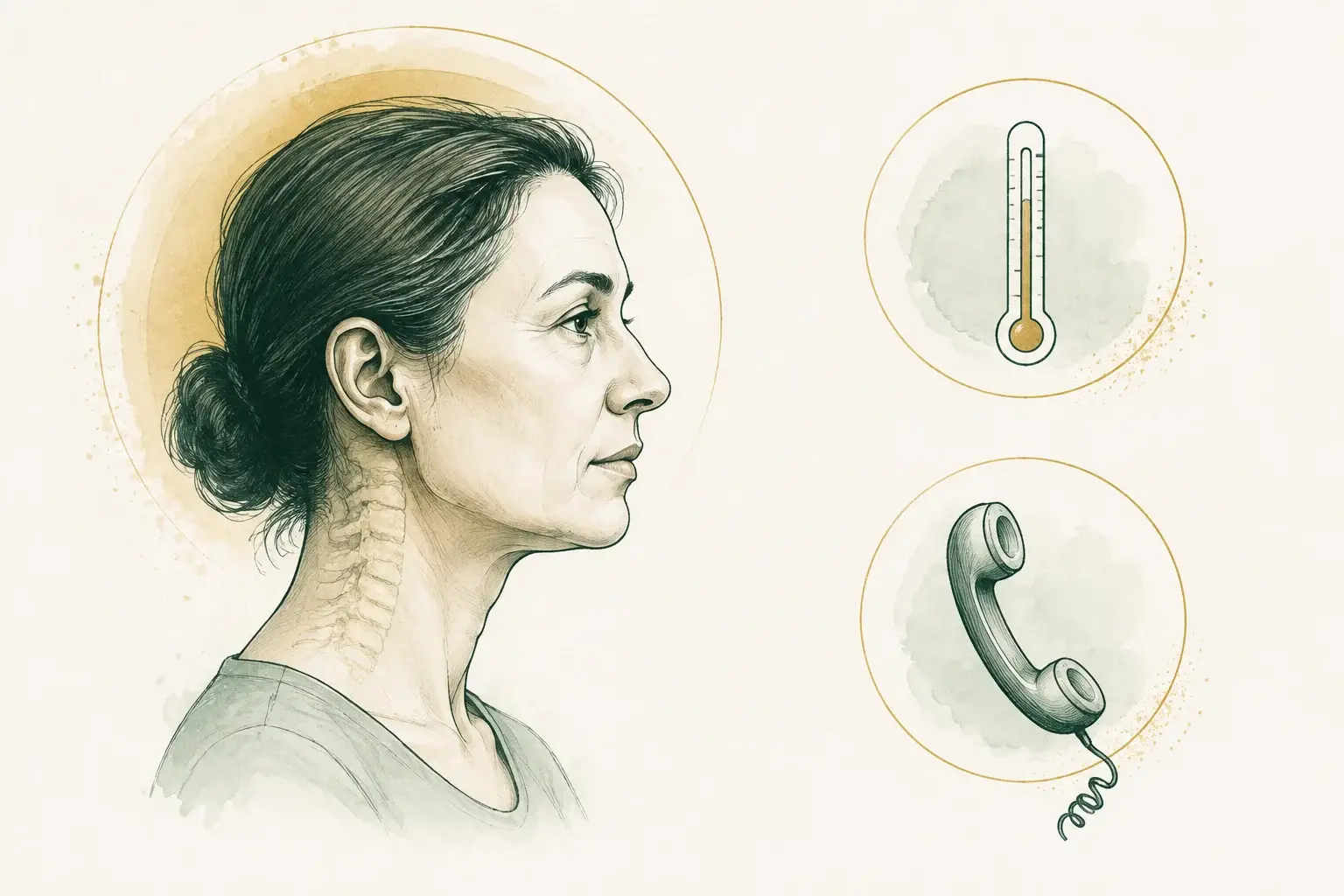
Headache warning patterns
- Sudden peak pain: A thunderclap headache needs urgent evaluation.
- Fever and stiff neck: This combination with a headache is a warning sign.
- New neurological symptoms: Weakness, confusion, speech changes, or a seizure require urgent assessment.
Which headaches need a neurologist but not the ER?
These don't need an emergency room. They need a neurologist with time:
- Headaches frequent enough that you track your month around them
- Reaching for pain relievers more than two or three days a week (a setup for medication-overuse headache, which quietly makes everything worse)
- A pattern that has changed in character or frequency
- Headaches steering your career, parenting, or plans
Most of these turn out to be migraine, and migraine is now one of the most treatable conditions in neurology. The tragedy isn't the diagnosis; it's the years people spend pushing through attacks that modern medicine can prevent. Our headache guide helps you work out which type of headache you have, with the three most often confused side by side.

Frequent headaches still deserve a plan
- Daily impact: Tell the neurologist how headaches affect work, sleep, and normal activities.
- Medication use: Bring a clear record of how often you use pain relievers.
- Changing pattern: Describe whether attacks are becoming more frequent or severe.
What about a brain tumor?
The fear behind most headache visits deserves a direct answer. Isolated headaches with a normal neurologic exam are very rarely a tumor; tumors declare themselves with progressive symptoms, seizures, or focal deficits far more often than with headache alone. A careful examination, the unglamorous, no-machine kind, identifies who genuinely needs an MRI. When imaging is needed, we order it promptly at an outside imaging center. When it is not, we explain why, clearly enough that you can stop worrying.
The bottom line
Emergencies are rare. Headaches you plan your month around, or push through at work and at home, are common and treatable, and you do not need a red flag to ask for help. In a 60-minute first visit, Dr. Achillefs Ntranos takes your full headache history and examines you, so you leave with a plan instead of a guess. Follow-ups are usually every one to three months and last 30 minutes. Request a visit in Beverly Hills or Los Angeles, or by video anywhere in California. No referral is needed, and the office confirms within 1 business day.
References
- National Institute of Neurological Disorders and Stroke. Headache, 2026.
- Do TP, et al. Red and orange flags for secondary headaches in clinical practice: SNNOOP10 list. Neurology, 2019.
- International Headache Society. 4.4 Primary thunderclap headache. International Classification of Headache Disorders, 3rd edition (ICHD-3).
- National Institute of Arthritis and Musculoskeletal and Skin Diseases. Polymyalgia Rheumatica and Giant Cell Arteritis, 2022.
- Hamilton W, Kernick D. Clinical features of primary brain tumours: a case-control study using electronic primary care records. British Journal of General Practice, 2007.
- Evans RW, et al. Neuroimaging for Migraine: The American Headache Society Systematic Review and Evidence-Based Guideline. Headache, 2020.