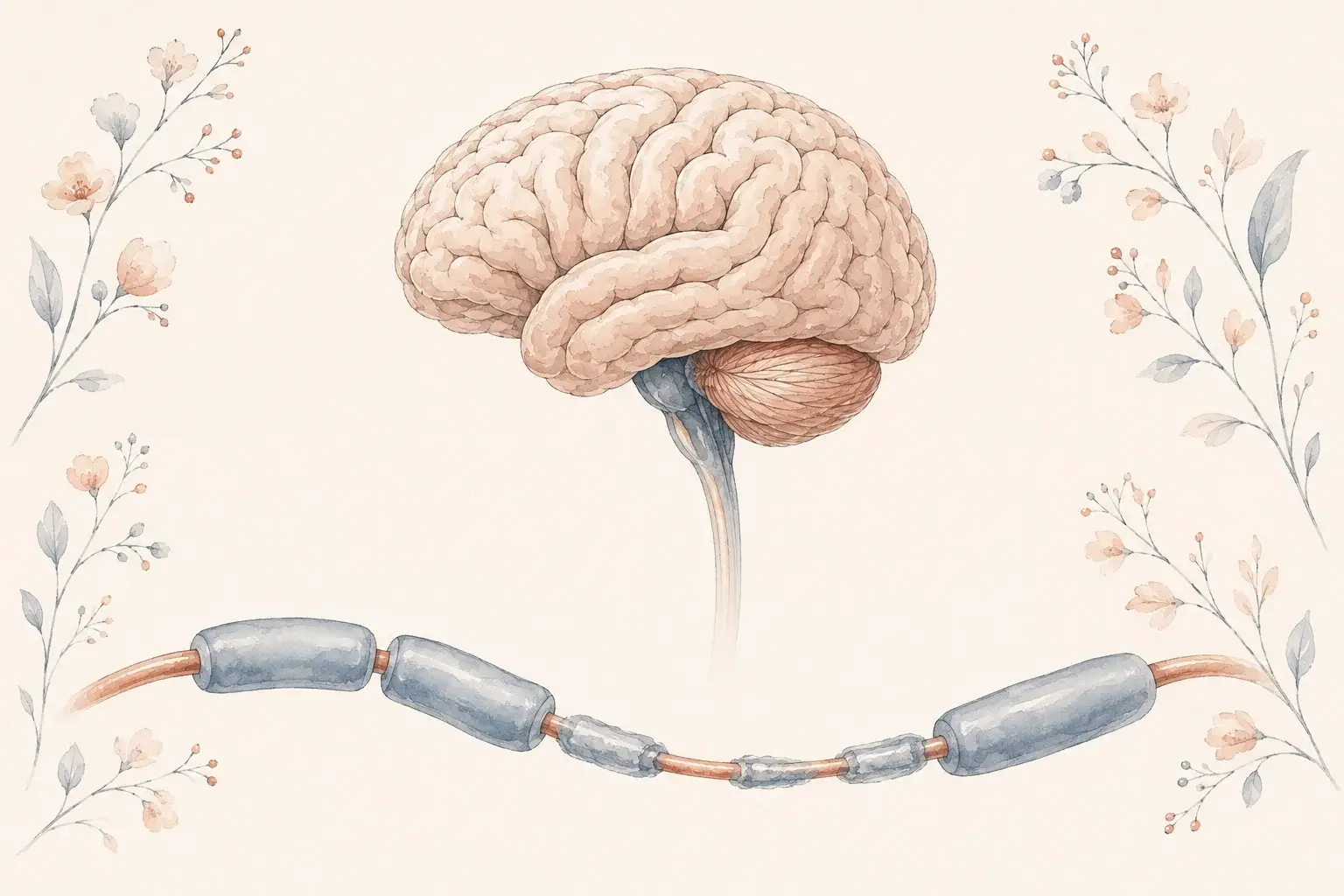
What progressive MS is
In relapsing-remitting MS, damage arrives in episodes and the nervous system recovers in between. In progressive MS, function declines slowly and steadily, over at least a year and usually longer, without the peaks and recoveries. Progression is usually measured in years, it can level off for long periods, and most people with progressive MS live into older age.
The two patterns reflect different biology. Relapses come from new inflammation, the kind that shows up as an enhancing lesion on MRI. Progression comes mostly from ongoing injury to nerve fibers that have already lost their myelin, from smoldering inflammation trapped inside the brain, and from the loss of the nervous system's ability to compensate. Most disease-modifying therapies were designed for the first process, which is why they help progression less.
Neurologists describe the course with two labels, and both can carry the qualifier "active" (new relapses or MRI lesions in the past year) or "not active":
- Primary progressive MS (PPMS). Progressive from the beginning, with no relapsing phase. About 10 to 15 in 100 people with MS have this form. It is diagnosed later in life on average, around 40, and affects men and women about equally, unlike relapsing MS.
- Secondary progressive MS (SPMS). A relapsing course that has shifted into steady worsening. The shift is gradual, and it is usually recognized in hindsight, when a year or two of slow decline can be seen with no relapse to explain it.

The progressive course
- Slope, not steps: Function declines steadily rather than in attacks with recovery.
- Primary or secondary: Progressive from the start, or after years of relapsing MS.
- Active or not: New MRI lesions or relapses on top of progression change treatment options.
PPMS and SPMS at a glance
| Primary progressive MS (PPMS) | Secondary progressive MS (SPMS) | |
|---|---|---|
| How it starts | Progressive from the first symptom, with no relapsing phase | After years of relapsing-remitting MS, as a gradual shift into steady worsening |
| Share of people with MS | About 10 to 15 in 100 | Varies; the share who make the shift appears to be falling with modern treatment |
| Typical age at onset | Around 40 on average | Usually midlife, historically 10 to 20 years after relapsing MS began |
| Women and men | About equally | More often women, as in relapsing MS |
| Relapses or MRI activity | No relapsing phase; "active" if new MRI lesions or an occasional relapse appear in the past year | "Active" while relapses or new MRI lesions continue in the past year, otherwise "not active" |
| Approved disease-modifying options | Ocrelizumab | Siponimod and the therapies approved for relapsing forms, for active SPMS |
| What usually worsens first | Walking, then stamina, balance, bladder control, and hand function | Usually walking, on top of what earlier relapses left behind |
What happened to progressive-relapsing MS?
If you were once told you had progressive-relapsing MS, you may wonder why the term has disappeared. It described MS that worsened steadily from the start and also had occasional relapses. In the 2013 revision of how the courses of MS are described, published by Lublin and colleagues in 2014, the label was retired.
People who would once have been given that label are now described as having "active" primary progressive MS: progressive from the start, with relapses or new MRI lesions in the past year. The change is in the name, not in the disease. The "active" qualifier still matters, because ocrelizumab, the therapy approved for primary progressive MS, helps most in people who still have inflammatory activity.
Progressive MS symptoms
The most common story in progressive MS is a walking problem that creeps in over a year or more: one leg that drags after a distance, stairs that need a rail, a limp that a partner notices before you do. That is because progression tends to concentrate in the spinal cord, and the long nerve fibers to the legs are the most vulnerable. Other symptoms that tend to build:
- Stiffness and spasms in the legs, worse at night or after sitting.
- Reduced stamina. The distance you can walk shrinks, and fatigue arrives earlier.
- Balance problems and a wider, more careful gait.
- Bladder urgency, frequency, or incomplete emptying, and constipation.
- Hand function, including fine tasks such as buttons and handwriting.
- Thinking speed and memory, which decline more often in progressive than in relapsing disease.
Pain, mood changes, and sleep problems are common and treatable.
What SPMS is like day to day. Secondary progressive MS usually feels less like a series of events and more like a slow change you notice in hindsight: the walk to the car that now needs a rest, stairs taken more carefully, more planning around fatigue and bathroom stops. Symptoms left by earlier relapses are still there, and heat or an infection can make them louder for a while. With the right adjustments, much of daily life can continue, and changes in walking, bladder, or energy are worth raising at every visit, because most of them can be treated.
A new symptom or a clear change over hours to days is not progression. It may be a relapse or an infection, so call your neurologist the same day. Sudden weakness on one side, trouble speaking, or sudden vision loss can be a stroke: call 911.
How progressive MS is recognized
There is no scan or blood test that labels MS progressive. The label comes from the timeline: a neurologist documents steady worsening over at least a year, independent of relapses, and confirms it on examination. In primary progressive MS the McDonald criteria also require MRI or spinal fluid evidence that the cause is MS rather than something else, because a slowly worsening spinal cord problem has many causes: compression, vitamin deficiencies, hereditary conditions, and other demyelinating diseases among them. A full MS evaluation works through that list before settling on the diagnosis.
Progression is measured, not guessed, and it can begin while the disease still looks relapsing, a pattern called progression independent of relapse activity. Timed walking tests, a hand-function test, cognitive screening, and a standardized disability scale at each visit turn "I think I am slower" into numbers that can be compared a year later. Newer tools, including neurofilament light chain blood tests and MRI measures of brain volume, add detail about how much damage is ongoing.
Treatment
Treatment has three aims, and each needs its own plan.
Slowing the disease. Ocrelizumab is the disease-modifying therapy approved for primary progressive MS, and siponimod is approved for active secondary progressive MS; other therapies approved for relapsing forms are used in secondary progressive MS that still shows relapses or new lesions. The benefit is a slowing of progression, not a reversal, and the trials show it is largest in people who are younger, earlier in the disease, and still have inflammatory activity on MRI. Our B-cell therapy comparison explains why ocrelizumab is the option in that class for PPMS. For non-active progressive disease, no therapy has yet shown a convincing effect, and that is where much of the current clinical trial effort is focused, including drugs that target the smoldering inflammation inside the brain.
Protecting function. Rehabilitation is not a consolation prize in progressive MS; it is one of the interventions with the best evidence for keeping people walking. Physical therapy for gait and strength, targeted exercise, treatment of spasticity, bladder management, and the right mobility aid used early rather than late all preserve independence. Our guide to what you can do to slow progression covers the everyday habits with evidence behind them.
Treating symptoms. Fatigue, spasms, pain, bladder symptoms, mood, and sleep each have specific treatments, and addressing them often improves daily life more than any single disease-modifying decision.
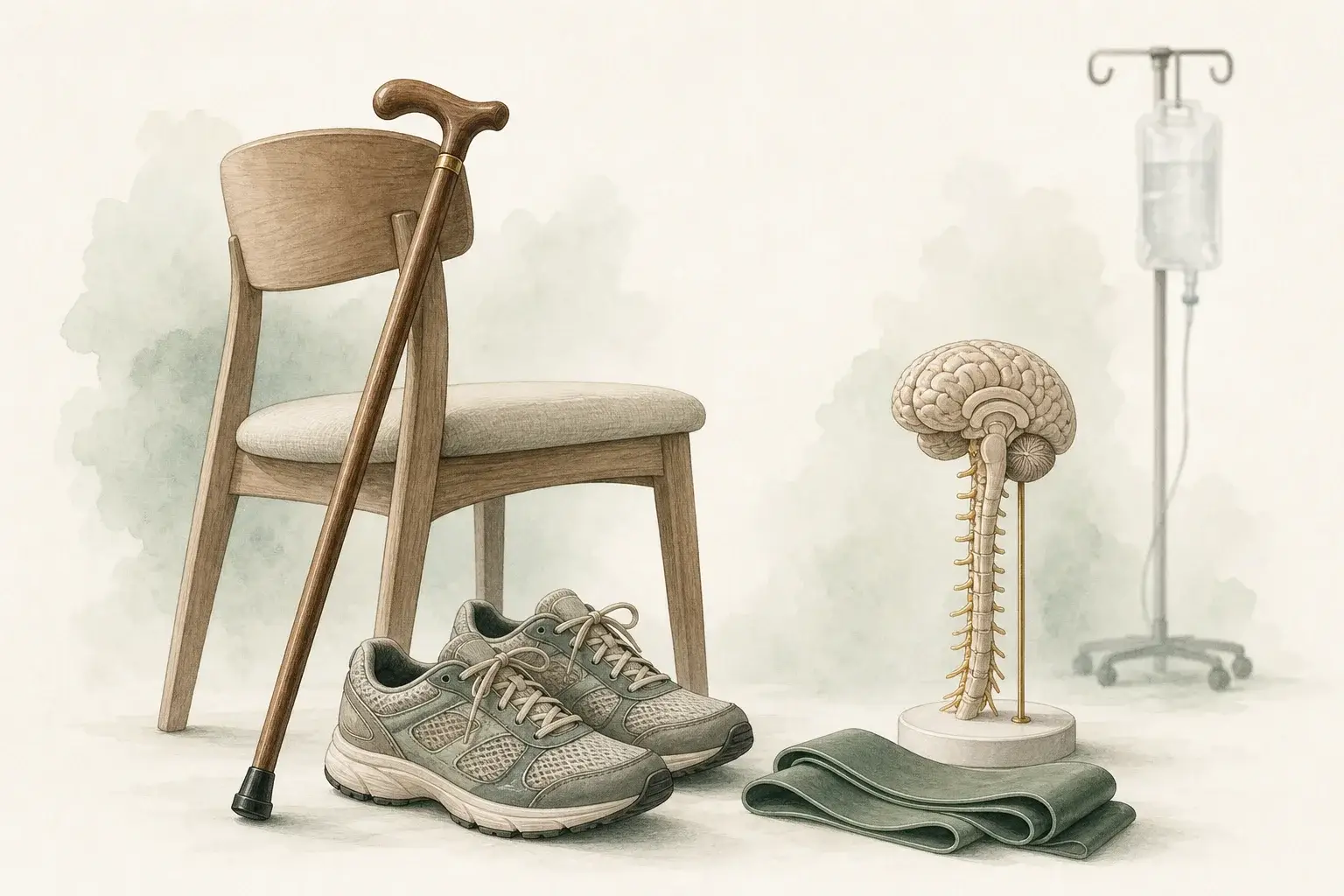
The parts of progressive MS care
- Disease-modifying therapy: Can slow progression, most clearly in active disease.
- Rehabilitation: Exercise, physical therapy, and the right aids protect walking and independence.
- Symptom care: Spasticity, fatigue, bladder, pain, and mood are treated in their own right.
When to see a neurologist
See an MS specialist if walking, balance, or stamina has been slowly worsening for months, whether or not you have an MS diagnosis, and if you have relapsing MS and suspect the course is changing. At our Multiple Sclerosis Clinic, Dr. Ntranos, a fellowship-trained MS specialist, reviews your history and MRI with you, measures function so change can be tracked, and works through the treatment options honestly, including trials. Measuring turns "I think I am slower" into numbers you can compare over time. A first visit is 60 minutes, usually available the same or next day, in Beverly Hills or Los Angeles, or by video anywhere in California. Follow-ups are usually every one to three months and last 30 to 45 minutes, and messages between visits are answered within 1 business day. Infusions, MRI, and labs continue to run through your insurance, and we handle the prior authorizations. Request a visit without a referral; the office confirms within 1 business day.
Frequently asked questions
References
- Lublin FD, et al. Defining the clinical course of multiple sclerosis: the 2013 revisions. Neurology, 2014.
- Montalban X, et al. Ocrelizumab versus placebo in primary progressive multiple sclerosis. New England Journal of Medicine, 2017.
- Kappos L, et al. Siponimod versus placebo in secondary progressive multiple sclerosis (EXPAND). The Lancet, 2018.
- Lublin FD, et al. How patients with multiple sclerosis acquire disability. Brain, 2022.
- National Institute of Neurological Disorders and Stroke. Multiple sclerosis.