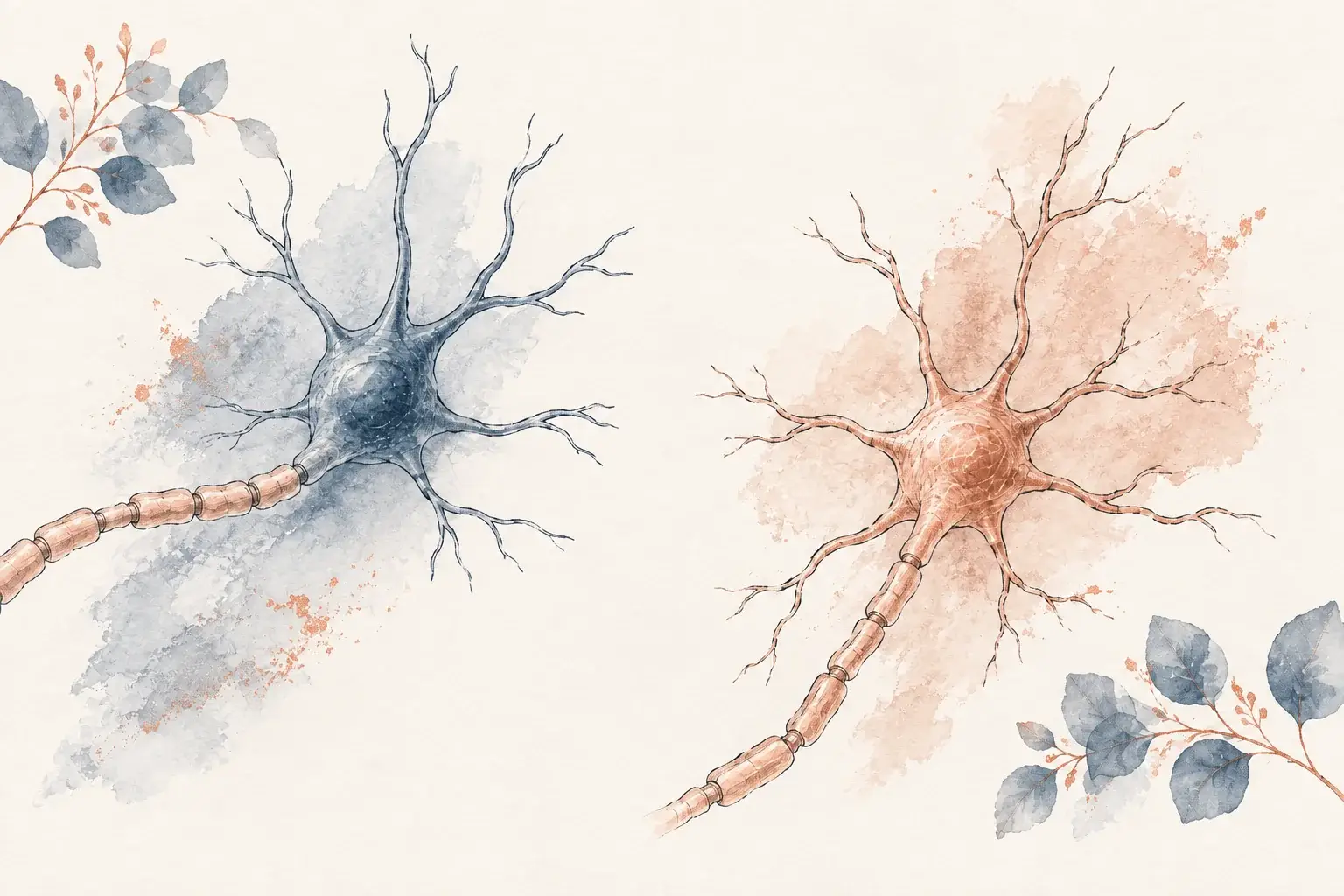
You were told you might have multiple sclerosis. Or you have already been diagnosed with MS, but the treatment is not working the way it should. If your neurologist has mentioned NMO or MOGAD, or you came across the terms while reading about your symptoms, you are probably wondering what makes them different from MS and why the distinction matters.
The short answer: NMO, MOGAD, and MS are three separate demyelinating diseases. They can look similar on the surface, but they behave differently, respond to different treatments, and have different long-term outlooks. Two blood tests, for AQP4 and MOG antibodies, plus the MRI pattern usually tell them apart. That matters because some MS medicines make NMOSD worse and do not help MOGAD.
What are NMO, MOGAD, and MS?
All three involve the immune system attacking the central nervous system, a process called neuroinflammation. Each targets a different structure and produces a different pattern of damage.
Multiple sclerosis (MS)
MS is the most common of the three. The immune system attacks myelin, the insulating layer around nerve fibers, at many sites throughout the brain and spinal cord. MS typically produces numerous small lesions scattered across the central nervous system, and it usually follows a relapsing-remitting course, at least at first (see what to do during an MS flare-up). It is most often diagnosed between the ages of 20 and 40. For how it usually begins, see our guide to the early signs of multiple sclerosis. A first attack, such as a first episode of optic neuritis, is called a clinically isolated syndrome when it does not yet meet the criteria for MS.
Neuromyelitis optica spectrum disorder (NMO or NMOSD)
NMO stands for neuromyelitis optica, which literally means inflammation of the optic nerves and spinal cord. The condition is now called neuromyelitis optica spectrum disorder, or NMOSD, because it can also involve parts of the brain. In most people with NMOSD, antibodies target a water-channel protein called aquaporin-4 (AQP4), which sits on astrocytes, the support cells of the brain and spinal cord.
NMOSD tends to cause severe, focused attacks rather than the scattered lesions of MS. The classic attack is a severe optic neuritis, often in both eyes, or a long segment of spinal cord inflammation (transverse myelitis). Some attacks begin with unexplained persistent hiccups or vomiting, caused by inflammation in a small brainstem region called the area postrema. NMOSD is rare, more common in women, and more common in people of African and Asian descent.
MOG antibody-associated disease (MOGAD)
MOGAD is the newest recognized member of the group. Here the antibodies target myelin oligodendrocyte glycoprotein (MOG), a protein on the outer surface of myelin. MOGAD was defined as a distinct condition only in the last decade, and formal diagnostic criteria were published in 2023, so many people with MOGAD were previously diagnosed with MS or NMOSD.
MOGAD can cause optic neuritis, transverse myelitis, and a form of widespread brain inflammation called ADEM (acute disseminated encephalomyelitis), which is especially common in children. About 40 to 50 percent have a single attack and never relapse, though the risk of a relapse rises the longer people are followed. Recovery from attacks is usually better than in NMOSD, though relapses can still cause lasting damage, which is why follow-up matters.
How these conditions differ
Symptoms and attack patterns
All three can cause vision loss, weakness, and numbness. The pattern and severity of attacks differ:
| Feature | MS | NMOSD | MOGAD |
|---|---|---|---|
| Typical onset age | 20–40 | 30–50 | Any age, including children |
| Attack severity | Mild to moderate | Severe | Moderate to severe |
| Optic neuritis | Usually one eye, moderate | Often both eyes, severe | Often both eyes, with swelling of the optic disc and nerve sheath |
| Spinal cord lesions | Short (1–2 segments) | Long (3 or more segments) | Long, often reaching the lower tip of the cord (conus) |
| Brain lesions | Many small lesions near the ventricles | Few, in AQP4-rich areas such as the brainstem | Large, fluffy, sometimes on the brain surface |
| Recovery from attacks | Usually good early on | Often incomplete without treatment | Generally good, especially in children |
| Course | Relapses, later may become progressive | Relapses, no progression between attacks | Single attack in about 40 to 50 percent; relapsing in the rest |
NMOSD vs MS
NMOSD was long thought to be a severe form of MS, and the two can still be confused at the first attack. The differences a neurologist looks for:
- NMOSD is driven by AQP4 antibodies, while MS has no antibody marker
- NMOSD spinal cord lesions are long, three or more vertebral segments, rather than the short lesions of MS
- NMOSD optic neuritis is severe and more often affects both eyes
- Persistent hiccups or vomiting, from inflammation of the area postrema in the brainstem, point to NMOSD
- NMOSD does not progress between attacks, while MS can enter a slow progressive phase
- Spinal fluid in NMOSD usually lacks the oligoclonal bands that most people with MS have
- Some MS medicines, including interferon beta and natalizumab, can make NMOSD worse
AQP4 antibodies in the blood settle it.
MOGAD vs MS
The two are easiest to confuse because both can begin with optic neuritis and both can involve the brain. The differences a neurologist looks for:
- MOGAD optic neuritis is more often in both eyes, more painful, and more likely to show a swollen optic disc
- MOGAD spinal cord lesions are long rather than short
- MOGAD brain lesions are large and poorly defined, rather than the small oval MS lesions beside the brain's fluid-filled spaces (periventricular)
- Spinal fluid in MOGAD usually lacks the oligoclonal bands, a sign of immune activity inside the nervous system, that most people with MS have
MOG antibodies in the blood settle it.
MOGAD vs NMOSD (MOG vs NMO)
These two were lumped together until the MOG antibody was identified. Both cause severe optic neuritis and long spinal cord lesions. The differences: NMOSD is defined by AQP4 antibodies, MOGAD by MOG antibodies, and the two are almost never both present. MOGAD affects children and men more often than NMOSD does, more often involves the optic disc and the lower spinal cord, and more often causes ADEM-type brain inflammation. Attacks in MOGAD usually recover better. Because the diseases respond differently to long-term therapy, the antibody result guides treatment, not the symptoms alone.
AQP4 (NMO) and MOG antibody tests
The most decisive distinction comes from blood testing:
- AQP4 antibodies are found in roughly 80 percent of people with NMOSD. The test is highly specific, so a positive result strongly supports the diagnosis. A negative result does not rule it out, and the 2015 international criteria allow NMOSD to be diagnosed without the antibody when the clinical and MRI picture is characteristic.
- MOG antibodies define MOGAD. Testing must use a cell-based assay for accuracy, and the result is interpreted alongside the clinical picture, because low-level positives can occur in other conditions. Levels can fall over time, so testing during or soon after an attack is most reliable.
- MS has no antibody marker. Diagnosis relies on MRI patterns, clinical history, and often lumbar puncture findings such as oligoclonal bands.
Here is what each result usually means. Your neurologist reads it together with your symptoms and MRI.
| Result | What it usually means | What usually happens next |
|---|---|---|
| AQP4 positive | NMOSD, when the symptoms fit. The test is highly specific. | Long-term attack prevention with an NMOSD treatment, usually from the first attack. MS medicines are avoided. |
| MOG positive on a cell-based assay, at a clear level | MOGAD, when the attack and MRI fit the pattern | Treatment of the attack, then follow-up. Relapse prevention is usually offered after a second attack. |
| MOG weakly positive | Uncertain. Low-level results also turn up in MS and other conditions. | Your neurologist weighs it against the MRI and the attack pattern and may repeat the test. The diagnosis rests on the whole picture, not the number alone. |
| Both negative | MS is more likely if the MRI and spinal fluid fit. NMOSD without the antibody is still possible when the picture is classic. | The diagnosis rests on the MRI, spinal fluid and course. Repeat antibody testing makes sense when the picture is unclear, ideally during or soon after an attack. |
MRI differences
Each condition produces a characteristic radiology pattern.
MS:
- Many small white matter lesions, often near the ventricles, in the corpus callosum, and in the brainstem and cerebellum
- Short spinal cord lesions, typically one to two vertebral segments
- Lesions that accumulate over time, some enhancing with contrast and others not
- See understanding your MS brain MRI for a detailed explanation
NMOSD:
- Long spinal cord lesions spanning three or more vertebral segments (longitudinally extensive transverse myelitis)
- Brain lesions in AQP4-rich locations: around the ventricles, the hypothalamus, the brainstem, and the area postrema
- Brain MRI can be normal at first
MOGAD:
- Optic nerve inflammation that extends along much of the nerve and involves the nerve sheath
- Long spinal cord lesions, often involving the conus
- Large, fluffy brain lesions that can resemble ADEM
- Lesions on the brain surface (cortical) more often than in MS
- Lesions that often shrink or disappear on follow-up scans, which is unusual in MS
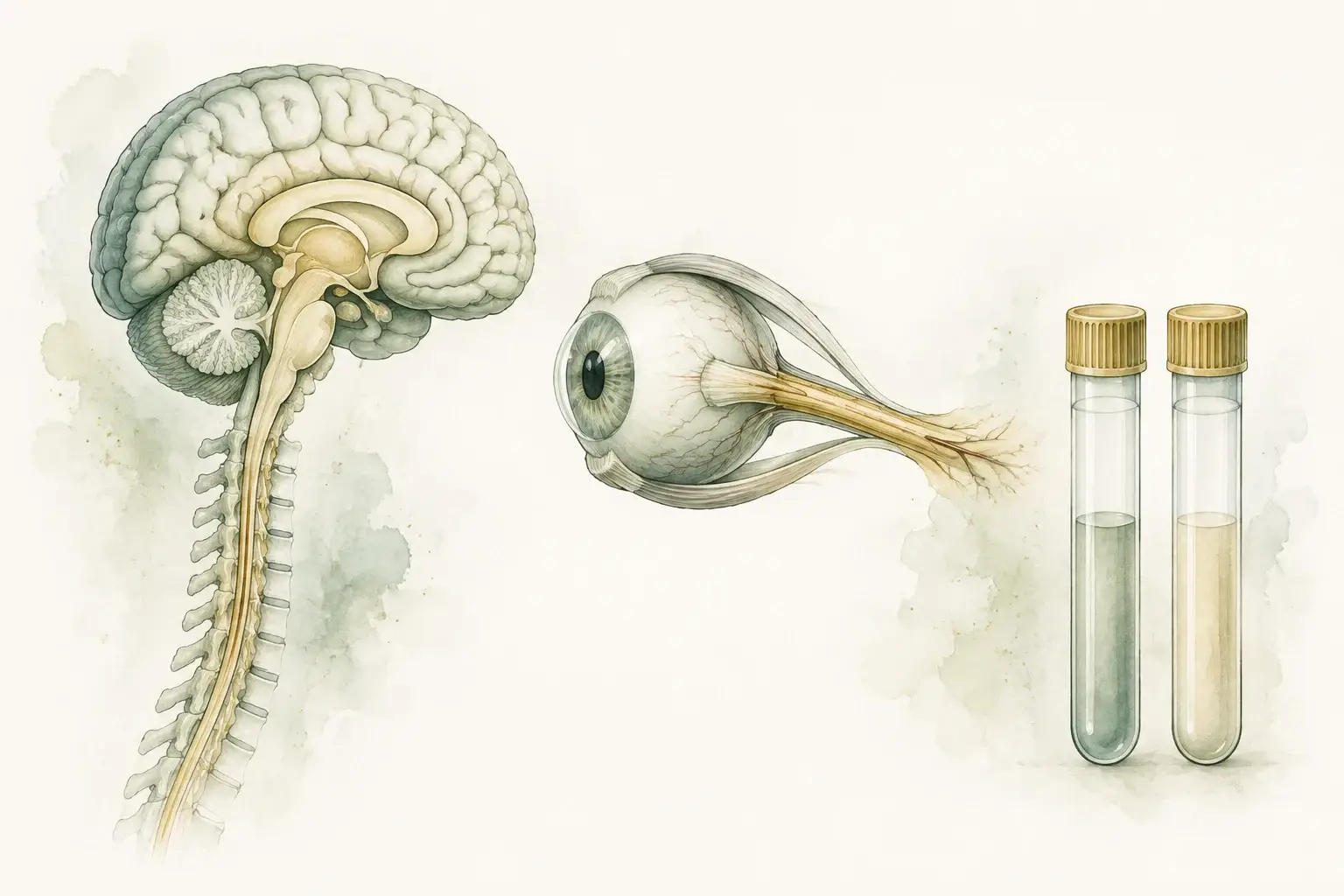
Similar symptoms, different diagnoses
- Shared locations: The optic nerves, spinal cord, and brain can be involved.
- Different evidence: MRI and targeted antibody tests help separate the diagnoses.
- Different treatment: The correct diagnosis matters because therapies are not interchangeable.
Why misdiagnosis is dangerous
Getting the wrong diagnosis among these three has real consequences, and it is one of the most common reasons people seek a second opinion on an MS diagnosis.
MS treatments that worsen NMOSD. Several MS disease-modifying therapies, including interferon beta and natalizumab, have been associated with more frequent and more severe attacks in people with NMOSD.
MS treatments that do not help MOGAD. Standard MS therapies such as interferon, glatiramer acetate, and the newer oral agents have no proven benefit in MOGAD, and time spent on them is time without effective relapse prevention.
Different responses to steroids. All three conditions are treated with steroids during an acute attack, but MOGAD attacks are unusually steroid-responsive and relapses can follow when steroids are stopped quickly. Your neurologist may use a slower taper or add other treatment for that reason.
If your MS treatment is not working
If you have been diagnosed with MS but continue to have severe attacks despite treatment, especially severe optic neuritis or extensive spinal cord attacks, ask your neurologist about testing for AQP4 and MOG antibodies. A change in diagnosis can lead to a more effective treatment plan.
Treatment differences
MS treatment
MS is treated with disease-modifying therapies that reduce the immune system's ability to attack myelin. There are many FDA-approved options, including oral medications, injectables, and infusions. High-efficacy therapies such as B-cell depleting antibodies are increasingly used early in the disease.
NMOSD treatment
NMOSD treatment has been transformed by targeted therapies approved for AQP4-antibody-positive disease:
- Eculizumab and ravulizumab block complement, part of the immune cascade that damages astrocytes
- Inebilizumab depletes B cells
- Satralizumab blocks IL-6 signaling
Older immunosuppressants such as rituximab, azathioprine, and mycophenolate are also used, particularly when the newer options are not accessible or in AQP4-negative disease.
MOGAD treatment
MOGAD treatment is evolving quickly, and this section is dated:
- Acute attacks are treated with high-dose steroids. Because relapses can follow rapid withdrawal, your neurologist may use a slower taper than in MS. Plasma exchange or IVIG may be added for severe attacks.
- Relapse prevention for people with relapsing MOGAD has relied on off-label immunosuppression with rituximab, mycophenolate, azathioprine, or maintenance IVIG.
- No therapy was FDA-approved specifically for MOGAD as of this page's last review. In 2026 the first positive phase 3 trial in MOGAD was reported, for satralizumab, a medicine already approved for AQP4-positive NMOSD, and regulatory review is expected to follow. Other agents, including rozanolixizumab, are in phase 3 trials. Ask your neurologist about the current status.
- Standard MS medications are not used.
The diagnostic workup
If your neurologist suspects any of these conditions, the evaluation typically includes:
- A detailed neurological examination of vision, strength, sensation, reflexes, and coordination, as part of a full neurological evaluation
- MRI of the brain, optic nerves, and the entire spinal cord with contrast, to identify active inflammation and the lesion patterns described above
- Blood tests for AQP4 and MOG antibodies, using cell-based assays
- Lumbar puncture, to check for oligoclonal bands (common in MS, uncommon in NMOSD and MOGAD), cell counts, and other inflammatory markers
- Additional blood work to rule out other autoimmune conditions and infections that can mimic these diseases, part of our autoimmune neurology workup
- Optical coherence tomography (OCT), a quick, painless scan of the retina that measures how much optic nerve fiber has been lost, which helps distinguish the conditions and track them over time
Is MOGAD or NMO worse than MS? Outlook and life expectancy
People often ask which of the three is "worst." The honest answer is that they are different rather than ranked.
- NMOSD attacks are more severe than typical MS relapses and, untreated, can leave lasting vision loss or weakness after only a few episodes. The targeted therapies listed above have dramatically reduced relapse rates, and with treatment most people avoid the accumulating disability that once defined the disease. Unlike MS, NMOSD does not progress between attacks, so preventing attacks is the whole game.
- MOGAD generally has the most favorable outlook of the three. Recovery is usually good, and long-term studies so far have not shown MOGAD to shorten life expectancy. The main risk is a relapsing course with attacks that damage the optic nerves or spinal cord, which is why people with a second attack are usually offered relapse prevention.
- MS relapses are individually milder, but MS can shift into a progressive phase over decades. Modern high-efficacy therapy started early has substantially improved that trajectory.
Whatever the diagnosis, ongoing follow-up matters: regular MRI, repeat antibody testing when the picture is unclear, and periodic review of the treatment plan. Cognitive symptoms are more typical of MS than of NMOSD or MOGAD, and our MS brain fog guide covers them. If you are planning a pregnancy, treatment adjustments may be needed, and many of the principles in our MS and pregnancy guide apply to NMOSD and MOGAD as well.

The diagnosis guides long-term care
- Review prior evidence: Bring MRI images, blood-test results, and the history of attacks.
- Confirm the distinction: A specialist can assess whether the evidence fits MS, NMOSD, or MOGAD.
- Match the therapy: These conditions require different treatment decisions.
MOGAD life expectancy
MOGAD does not appear to shorten life expectancy. In a 2023 study of a large group of people with MOGAD, no one died during follow-up, and the authors judged mortality comparable to that of the general population of the same age (reference 10); longer studies are still needed. What MOGAD can cost is function rather than years, through relapses that damage the optic nerves or spinal cord.
NMOSD life expectancy
NMOSD can shorten life when attacks are severe and untreated, but today's treatment has changed the outlook. In older studies, from before antibody testing and targeted therapy, some people died from attacks in the upper spinal cord that affected breathing (reference 14). Preventing attacks now protects survival as well as function, though long-term survival data from the modern treatment era are still being gathered.
When to see a specialist
Sudden vision loss, or weakness or numbness that spreads over hours to days, needs an emergency department the same day, because attacks respond best to early treatment. For a planned visit, consider a neurologist experienced in demyelinating diseases if:
- You have been diagnosed with MS but treatment is not controlling your attacks
- You have had severe optic neuritis, especially in both eyes
- Your MRI shows a long spinal cord lesion (three or more vertebral segments)
- You have never been tested for AQP4 or MOG antibodies
- Your symptoms or MRI findings do not fit a typical MS pattern
- You would like a second opinion on your diagnosis
At our multiple sclerosis clinic in Los Angeles, the autoimmune neurology workup includes the antibody testing needed to distinguish NMOSD, MOGAD, and MS. Doubts about the label are worth settling. In a 60-minute first visit, Dr. Achillefs Ntranos reviews your scans and test results and explains which diagnosis they support. Follow-ups are usually every one to three months and last 30 to 45 minutes. Request a visit in Beverly Hills or Los Angeles, or by video anywhere in California. No referral is needed; the office confirms within 1 business day.
Frequently asked questions
References
- Mayo Clinic. Neuromyelitis optica spectrum disorder.
- Mayo Clinic. Myelin oligodendrocyte glycoprotein antibody-associated disease (MOGAD): diagnosis and treatment.
- Wingerchuk DM, et al. International consensus diagnostic criteria for neuromyelitis optica spectrum disorders. Neurology, 2015.
- Banwell B, et al. Diagnosis of myelin oligodendrocyte glycoprotein antibody-associated disease: International MOGAD Panel proposed criteria. The Lancet Neurology, 2023.
- Roche. Enspryng (satralizumab) reduces risk of relapses by 68% in phase 3 METEOROID study in MOGAD. Media release, April 2026.
- National Institute of Neurological Disorders and Stroke. Neuromyelitis Optica.
- Siegel Rare Neuroimmune Association. MOG antibody disease: prognosis and management.
- Relapse risk and long-term course in MOG antibody-associated disease. 2025.
- Genentech. ENSPRYNG (satralizumab-mwge) prescribing information. DailyMed.
- Mortality in myelin oligodendrocyte glycoprotein antibody-associated disease. 2023.
- Double seropositivity for aquaporin-4 and MOG antibodies. 2022.
- Interferon beta-1b and worsening of neuromyelitis optica. Archives of Neurology, 2012.
- Natalizumab in neuromyelitis optica spectrum disorder. Neurology, 2012.
- Wingerchuk DM, et al. The clinical course of neuromyelitis optica (Devic's syndrome). Neurology, 1999.